There are two distinct ways to travel as a Caribbean person. The first is the one we know all too well: arriving in a foreign, metropolitan airport, the weight of your passport in your hand feeling less like a key and more like a question mark. There is the slight tightening in your chest as you approach the immigration counter, the mental rehearsal of your answers, the quiet prayer that the officer will be in a good mood. It is a journey often defined by a subtle, exhausting performance of worthiness.
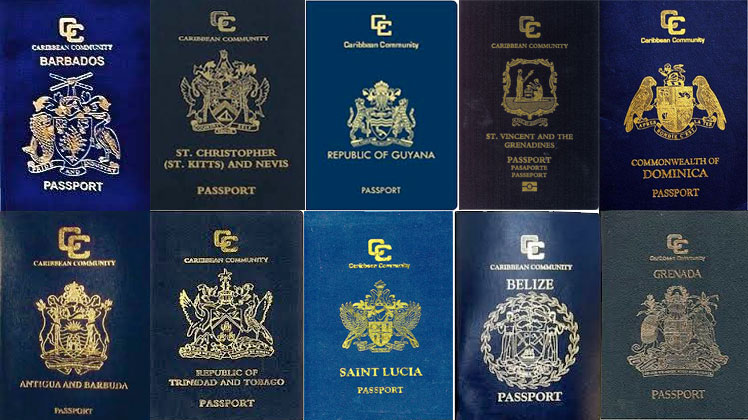
And then there is the way it is supposed to feel when you travel within our own Caribbean Sea. The landing should feel like a homecoming, the air thick with a familiar warmth. The passport in your hand, bearing the proud CC insignia of the Caribbean Community, should feel like a key to a door that is already open. It should be a statement of belonging.
For many of us, the reality lies somewhere in a confusing, frustrating space between those two experiences. We hold a passport that carries the promise of community, yet we are often unsure of what that promise actually entails. We feel a surge of pride in our regional identity, but that pride is often met with the sting of inconsistent policies and the confusion of misunderstood rights.
This guide is here to clear the fog. This is not policy jargon. This is a real-world, lived guide for the seasoned Caribbean traveler who has stories of being given seven days at a border and for the young national who has never explored a sister island. It is for the diaspora member dreaming of a long-term return and the freelancer seeking to build a life that spans the archipelago.
We will treat the CARICOM passport for what it is: a tool, a right, and a powerful, often underused, opportunity. It is time to understand the key we hold in our hands.
Contents
- 0.1 What Is the CARICOM Passport, Really?
- 0.2 Who the CARICOM Passport Is For:
- 0.3 The 6-Month Automatic Stay: What It Actually Means
- 0.4 Moving Freely: Travel Between CARICOM Countries (In Theory vs. Reality)
- 0.5 The CSME Explained Simply: Free Movement of Skilled Nationals
- 0.6 The Right to Work: What’s Possible (and What’s Not)
- 0.7 Immigration as a CARICOM National: The Emotional Experience
- 0.8 Limitations & Frustrations: An Honest Conversation
- 0.9 Why the CARICOM Passport Still Matters
- 0.10 How the CARICOM Passport Supports Slow, Intentional Travel
- 0.11 Practical Tips for CARICOM Passport Holders
- 0.12 Final Reflection: Reclaiming What’s Ours
- 1 Are You Planning Your Next Trip? Here’s What I Use
- 2 Check Out Other Guides
What Is the CARICOM Passport, Really?
Before we can unlock its power, we must understand what the CARICOM passport is in simple, human terms. At its core, it is a national travel document issued by one of the 15 member states of the Caribbean Community that also serves as a symbol of your regional citizenship.
The passport itself, the physical booklet is still a passport of your home nation. A Jamaican holding a CARICOM passport is still a Jamaican citizen. A Barbadian is still a Barbadian. The CARICOM branding does not replace your nationality; it enhances it.
The symbol on the cover, the interlocking “CC,” is more than just a logo. It is a statement. It signifies that the holder is not just a citizen of their individual country, but a national of the wider Caribbean Community. It was introduced as a visual affirmation of our shared identity and our commitment to regional integration, a small but significant step towards the dream of moving through our own backyard as one people.
Clearing Up Common Misconceptions:
- It is not a single, universal passport. Unlike the EU, there is no central CARICOM passport-issuing authority. You receive it from your own country’s passport office.
- It does not grant you the right to live and work anywhere, unconditionally. This is the most significant point of confusion. The passport is the key that opens the door to specific rights under CARICOM agreements, most notably the CARICOM Single Market and Economy (CSME). It is not a free-for-all.
- Not every citizen of a CARICOM country holds one. The rollout of the CARICOM-branded passport has been gradual. If you have an older passport from a member state without the CC logo, you are still a CARICOM national and are entitled to the same rights. The logo is a symbol, but the rights are attached to your citizenship.
Think of it this way: your passport is your national ID for the world. The CARICOM branding on it is a special endorsement that alerts officials within our fifteen-member family that you are to be treated not as a foreigner, but as one of us.
Who the CARICOM Passport Is For:
The rights and benefits of being a CARICOM national are for every citizen of a member state, but they become particularly relevant for certain groups of people. Understanding this can help you see the potential in your own travel document, even if you don’t travel often.
- CARICOM Nationals at Home: Even if you only travel for a family vacation or a weekend getaway, understanding your rights can transform a potentially stressful border crossing into a smooth and dignified experience.
- The Diaspora: For those living abroad, the CARICOM passport is a powerful tool for reconnection. It facilitates longer stays, making it easier to plan extended visits to reconnect with family, explore heritage, or even test the waters for a potential return home.
- Students: The passport is your gateway to exploring educational opportunities across the region, from the University of the West Indies campuses to other tertiary institutions, often with simplified entry requirements.
- Freelancers and Remote Workers: This is a growing and vital group. The CARICOM passport, particularly the right to a six-month stay, provides a legal foundation for a nomadic lifestyle within the region, allowing you to live and work remotely from different islands.
- Skilled Nationals under CSME: For professionals in specific categories, the passport is the first step towards true economic mobility, giving you the right to seek employment across the region without a work permit.
- Retirees and Returnees: For those looking to spend their golden years in the Caribbean, the passport simplifies the process of long-term stays and property ownership in many member states.
This matters even if you don’t travel often because it is about potential. It is about knowing that the opportunity to move, to explore, to work, and to connect is a part of your birthright as a citizen of the Caribbean Community.
The 6-Month Automatic Stay: What It Actually Means
This is the single most powerful and practical benefit afforded to every CARICOM national, and the one most often misunderstood by both travellers and, at times, officials.
Based on a landmark ruling by the Caribbean Court of Justice (CCJ), every CARICOM national has the right to enter another member state and be granted an automatic and definite stay of six months upon arrival.


What “Automatic Stay” Should Look Like:
When you present your CARICOM passport (or a national passport from a member state) to an immigration officer in another member state, they are legally obligated to grant you a six-month stay. This should be the default. They should not treat you like a foreign tourist who needs to justify a long visit.
Where the Confusion Happens:
Despite this being the law, many travellers report being granted shorter stays, 30 days, 90 days, or even just a week. This happens for a few reasons: inconsistent training of immigration officers, a lingering culture of discretionary power at the border, or a misunderstanding of the law.
What Immigration Officers May Still Ask:
Even with the six-month rule, an immigration officer has the right to ensure you are not a security risk or likely to become a charge on the public purse. They may still ask for:
- Proof of Onward Travel: This does not have to be a return ticket to your home country in a week. It can be a ticket to any other country, even if it’s six months later.
- Address of Accommodation: Where you will be staying.
- Proof of Funds: Evidence that you can support yourself during your stay.
Practical Tips for a Smooth Entry:
- Be Prepared: Have your documents in order. A printed copy of your onward ticket and accommodation details can make the process smoother.
- Communicate Clearly and Calmly: When asked about the purpose of your visit, be honest. “I’m visiting for an extended period to explore the country” is a perfectly valid answer. Avoid using words like “work” or “live” unless you have the proper documentation to do so.
- Know Your Rights: If you are granted a shorter stay, you have the right to politely inquire why. You can say, “Excuse me, officer, I am a CARICOM national, and my understanding is that I am entitled to an automatic six-month stay. Could you clarify why I was given a shorter period?” Often, this simple, respectful question is enough to have the stamp amended.
This right fundamentally changes the nature of regional travel. A non-CARICOM traveler often has to prove they are leaving soon. You, as a CARICOM national, have the right to stay.

Moving Freely: Travel Between CARICOM Countries (In Theory vs. Reality)
The ultimate vision of CARICOM is a region where its citizens can move with the same ease as someone traveling between states in the USA or countries in the EU’s Schengen Area. This is the theory. The reality, as any seasoned Caribbean traveler knows, is a little more complicated.
The Intention: The intention behind the free movement agreements is to dismantle the colonial-era borders that have kept us separated. It is to foster a sense of a single domestic space, encouraging tourism, trade, and cultural exchange among our people.
The Lived Experience: While the six-month stay is a legal right, the experience of crossing borders can be inconsistent.
- Airport vs. Land/Sea Borders: The experience at major international airports is often more standardized than at smaller sea ports or land borders (like between Guyana and Suriname), where rules may be interpreted differently.
- Airline Confusion: Sometimes, the first hurdle is the airline check-in counter. Airline staff, often not trained in the nuances of CARICOM law, may incorrectly insist on seeing a short-term return ticket before allowing you to board. This is a common point of friction.
- Immigration Discretion: The culture of discretion at immigration desks is slowly changing, but it still exists. An officer’s mood or interpretation of the rules can significantly impact your experience.
This is why patience and preparation are your two greatest assets when traveling within the region. The system is not perfect, but it is ours. Navigating it with calm confidence, armed with knowledge of your rights, is the most effective way to ensure a smooth journey.
The CSME Explained Simply: Free Movement of Skilled Nationals
If the six-month stay is about the freedom to visit, the CARICOM Single Market and Economy (CSME) is about the freedom to work and contribute.


What CSME Stands For: Caribbean Community Single Market and Economy.
Why It Exists: The goal is to create a single, unified economic space. This means allowing goods, money, and, most importantly, skilled people to move across the region freely, creating a larger, more dynamic market for everyone.
Who Qualifies as a “Skilled National”?: This is the key point. The “free movement of skills” does not apply to everyone. It is for specific categories of workers who are considered essential to regional development. These categories include:
- University Graduates
- Media Workers
- Artists and Musicians
- Sportspersons
- Nurses and Teachers
- Artisans with a Caribbean Vocational Qualification (CVQ)
What the Skills Certificate Does (and Doesn’t Do): If you fall into one of these categories, you can apply for a CARICOM Certificate of Recognition of Skills Qualification (often called a “Skills Certificate”). This document allows you to enter another participating CARICOM country and legally seek employment without needing a work permit. It does not guarantee you a job, but it gives you the right to compete for one on equal footing with local citizens. This is a powerful tool for professional mobility within the region.
The Right to Work: What’s Possible (and What’s Not)
This is where the lines can get blurry, especially in the age of the digital nomad.
- Visiting vs. Working: The six-month stay is for visiting, tourism, and exploring. It is not a work permit.
- Being Employed Locally: To be formally employed by a company in another CARICOM country, you generally need to either have a Skills Certificate (if you qualify) or go through the standard work permit process.
- Freelancers & Remote Workers (The Grey Area): What if you are a graphic designer from Jamaica, staying in Barbados for five months, but your clients are all in the US and Europe? You are not taking a local job. This is a legal grey area that CARICOM policy has not fully caught up with. In practice, many remote workers use the six-month stay to live and work in other member states without issue, as their work is not impacting the local job market. Honesty and discretion are key.
The gap between policy and practice is significant here. Many CARICOM nationals still work informally across the region, a testament to the deep, historical patterns of inter-island migration. The policy is evolving, but it is moving much slower than the reality of our interconnected lives.
Immigration as a CARICOM National: The Emotional Experience
To approach an immigration counter holding a CARICOM passport is to hold a bundle of contradictions in your hand. It is a deeply emotional experience that swings between pride and apprehension.
There is the quiet surge of belonging when an officer in a sister island sees the “CC” logo, smiles, and says, “Welcome home.” In that moment, the dream of CARICOM feels real. It is a moment of recognition, a confirmation that these borders are, in some small way, beginning to dissolve.
Then there is the familiar sting of frustration when the opposite happens. When your right to be there is questioned, when you are treated with suspicion, when the promise of community feels like a hollow slogan. It can feel like a personal rejection, a reminder of how far we still have to go.
Traveling within the region is a different emotional landscape than traveling outside it. Outside, you are an ambassador for your country. Inside, you are a member of the family, with all the complexities that entails. You expect to be understood, to be welcomed. This is why the inconsistencies can feel so sharp. The key is to navigate these moments with confidence, clarity, and the calm assurance that comes from knowing your rights.
Limitations & Frustrations: An Honest Conversation
To truly empower ourselves, we must be honest about the challenges. The CARICOM system is not perfect, and acknowledging its flaws is the first step toward advocating for its improvement.
- Inconsistent Application of Rules: As discussed, this is the number one frustration.
- Airline Misinformation: Airlines are often the first and most difficult gatekeepers.
- Limited Inter-Island Connectivity: The high cost and limited availability of regional flights is the single greatest barrier to true free movement. It is a structural problem that keeps us apart.
- Language Barriers: While English is the official language of most member states, the inclusion of Dutch-speaking Suriname and French/Creole-speaking Haiti presents real communication barriers that we have yet to effectively bridge.
- Regional Bias: Let us be honest. Inter-island rivalries and stereotypes exist. These can sometimes manifest as xenophobia at a personal or even an official level, creating unpleasant and unwelcoming experiences.
Acknowledging these realities is not an act of disloyalty to the Caribbean dream. It is an act of love. It is saying that we believe in this project so much that we demand it be better, fairer, and more reflective of the community we know we can be.
Why the CARICOM Passport Still Matters
Despite the frustrations, the CARICOM passport is one of the most important documents a Caribbean citizen can hold. Its power is symbolic, practical, and political.
- Regional Identity: It is a tangible symbol of our shared identity and our collective effort at self-determination.
- Economic Opportunity: It is the key to unlocking the economic potential of a region of millions, rather than being confined to an island of thousands.
- Cultural Reconnection: It facilitates the kind of deep, immersive travel that allows us to truly know our neighbours and ourselves.
- Reducing Dependency: It encourages us to invest our time and money within our own region, reducing our economic and cultural dependency on travel to the “global north.”
Caribbean people traveling the Caribbean is a powerful political act. It is a declaration that our region is worthy of our time, our money, and our curiosity. It is a quiet revolution against the colonial and neo-colonial forces that have always sought to keep us apart.


How the CARICOM Passport Supports Slow, Intentional Travel
The CARICOM passport is the ultimate tool for the slow traveler. The six-month stay is a built-in permission slip to go deeper.
- Stay Longer: Instead of a frantic one-week island-hop, you can spend three months in one country, truly learning its rhythms, its people, and its stories.
- Explore Beyond the Tourist Trail: With more time, you can move beyond the resorts and explore the lesser-known member states, discovering the incredible diversity of our community.
- Build Real Relationships: Slow travel allows you to build genuine connections, supporting local economies and fostering a deeper sense of regional kinship.
It allows us to reframe Caribbean travel as more than just a short holiday. It becomes an opportunity for learning, for connection, and for a profound exploration of our own regional home.
Practical Tips for CARICOM Passport Holders
- Always Travel With: Proof of onward travel (even if it’s six months away), details of your accommodation, and access to sufficient funds.
- Be Mindful of Your Words: At immigration, you are “visiting” or “exploring.” Avoid the word “work” unless you have the legal right to do so.
- Respect Local Laws: Your rights as a CARICOM national do not exempt you from the laws of the country you are visiting.
- Do Your Research: Understand the specific entry requirements and cultural nuances of the country you are visiting before you arrive.
Final Reflection: Reclaiming What’s Ours
The CARICOM passport is not a perfect document, because the community it represents is not a perfect union. It is a work in progress, a living idea that we are all building together, every time we cross a regional border.
But it is powerful. It is powerful when we understand it, when we use it, and when we respectfully demand the rights that it affords us. It is a key that has been placed in our hands, and it is up to us to learn how to turn the lock.
I encourage you to see your passport not just as a booklet for collecting stamps, but as an invitation. An invitation to learn your rights. An invitation to travel with intention. An invitation to explore the beautiful, complex, and resilient family of nations that you belong to. Start where you are. Pick a sister island you’ve always been curious about. Stay a little longer. Listen a little closer. Reclaim what is already, and has always been, ours.
Are You Planning Your Next Trip? Here’s What I Use
These are the tools I rely on to make every trip smoother, safer, and more meaningful. If you use the links below, I may earn a small commission at no extra cost to you. Thank you for supporting this blog and my journey as a full-time traveller 💜
1. Learn the Local Language
I use Babbel to practice Spanish, French, and Portuguese while travelling. The app makes it so easy to learn useful phrases on the go.
2. Travel Insurance is a Must
I never leave home without SafetyWing. They’re affordable and ideal for frequent travellers or digital nomads.
3. Book Your Tours & Experiences
For unique local tours and must-see experiences, I use:
→ Viator
→ Get Your Guide
4. Always Stay Connected
No matter where I go, Keepgo helps me stay connected with international data SIMs and eSIMs that actually work. A lifesaver when Wi-Fi fails!
5. Organise Your Itinerary
I use Tripsy to plan and store my itineraries, documents, and bookings in one clean app. It’s perfect for keeping track of everything in one place.
Until next time, travel softly,
Destiny 💜
Check Out Other Guides
Essential Guide to Passports and Visas for Jamaicans: Where You Can Go and What You Need
Discovering Barbados: A Journey of Adventure and Relaxation
We Shall Rise Again: A Story of Jamaica After Hurricane Melissa
The Ultimate Guide to the CARICOM Community for Travelers
The 15 Member States of CARICOM: One Region, Many Stories
