Things to Do in Lima That Aren’t Just Touristy (A Real Local’s Guide to Peru’s Capital)
Most people arrive in Lima with the same plan.
They land at Jorge Chávez, check into their hotel in Miraflores, spend a day ticking off the obvious sights, and then fly to Cusco feeling like they have seen Lima. They have looked at it, certainly. Walked through parts of it. Taken photographs of the things that appear on every list of things to do in Lima.
But they have not seen it. Not really.
Lima is a city that does not give itself up easily. It requires a particular kind of attention, the kind that comes from slowing down, from eating in places where the menu is not in English, from following a local friend’s recommendation down a side street at lunchtime, from staying somewhere long enough that the woman at the corner bakery begins to recognise your face. Lima rewards the traveller who is willing to receive rather than simply consume.
I spent several days in Lima during my Peru trip, and I can tell you that the version of the city I came to understand by the end was almost unrecognisable from the one I arrived at. The first day was the Lima of the guidebooks. By the third, I was eating at a cook shop with no English menu, walking streets that did not appear on any tourist map, and watching a sunset I had not planned for from a cliff edge I had found entirely by accident.
This article is for the traveller who wants that version. Not the postcard. The city.
Contents
- 1 Why Lima Deserves More Than You’ve Given It
- 2 The Local Friend: What Changes When Someone Shares Their City With You
- 3 The Markets: Where Lima’s Real Life Happens
- 4 Ocean Walks: The Cliff Edge and What It Gives You
- 5 Museums: The Lima That History Built
- 6 The Historical Centre: Lima’s Real Depth
- 7 Eating Like a Local: Places Without English Menus
- 8 Hidden Gems: The Lima That Most Visitors Miss
- 9 Lima by Neighbourhood: Understanding the City’s Character
- 10 Practical Notes for the Cultural Immersion Visitor
- 11 A Sample Four-Day Lima Itinerary for the Cultural Traveller
- 12 Frequently Asked Questions
- 12.1 How many days do I need in Lima to get beyond the tourist trail?
- 12.2 Is it safe to walk around Lima’s historical centre?
- 12.3 What is the best way to find local restaurants without English menus?
- 12.4 Can I visit all the museums in one day?
- 12.5 Can I book a consultation to plan my Lima itinerary?
- 13 Are You Planning Your Next Trip? Here’s What I Use
Why Lima Deserves More Than You’ve Given It
Lima is the most underestimated capital city in South America. I say this knowing that it is a bold statement and meaning every word of it.
It has a food culture that has drawn serious international attention not the Lima of the five-star tourist restaurants, but the Lima of the cook shops and the market stalls and the three-generation family cevicherías that have been making the same recipe since before your parents were born. It has a history that stretches back thousands of years, built in layers across multiple civilisations, and most of that history is sitting in plain sight, waiting for someone to pay attention to it. It has neighbourhoods with personalities so distinct from each other that moving between them feels like travelling between different cities entirely.
And yet the traveller on a tight schedule treats it as an airport with a Miraflores attached. Two nights, the walk, the ceviche, done. On to Cusco.
I understand it. Peru pulls you toward its mountains with an urgency that is hard to resist. But I want to make the case, carefully and honestly, that Lima deserves at least four days of your genuine attention. Not four days of ticking off a list. Four days of walking slowly, eating freely, talking to people, and letting the city be what it actually is, which is extraordinary.
Lima does not announce itself. It accumulates. By the end of my third day, I understood that I had been wrong about this city in almost every way, and that the wrongness had been entirely my own impatience.
Before I give you the list of things to do, I want to tell you something that belongs at the beginning of this article rather than tucked into the middle of it.
A friend of mine has a friend who lives in Lima. Through that connection a text message, a warm introduction, the particular generosity of someone choosing to share their city with a stranger I was able to spend time in Lima with someone who knew it the way only a resident can know it.
Not the Lima of the tourist trail. The Lima of the neighbourhood bakery that opens at half past six and makes pan de yema that is still warm when you buy it. The Lima of the miradór that is not on any map but has an angle on the sunset that none of the official viewpoints offer. The Lima of the restaurant on a side street, where the specials board is handwritten and the portions are generous, and no one has ever once thought to translate the menu.
We ate somewhere I would never have found alone. We walked streets that I would have walked straight past. We sat in a park that I had been to before but had not understood, because understanding a park in a city you do not live in requires someone to explain what the park means to the people who live there.
I tell you this not because you necessarily have a friend of a friend in Lima, though you might, and it is worth asking, but because this experience shaped how I think about what Lima offers the genuinely curious traveller. The best things in Lima are not on the official lists. They are in the knowledge of people who live there and are willing to share it.
The practical takeaway: if you have any connection, however tenuous, to someone who lives in Lima or has lived there recently, use it. Send the message. Ask for recommendations. People are almost always more generous with their city knowledge than you expect, and one genuine local recommendation is worth more than an entire page of travel blog aggregations.
The Markets: Where Lima’s Real Life Happens
Markets in Lima are not curated experiences. They are not designed for tourists. They are the places where the city actually feeds itself, and visiting them with genuine curiosity rather than a camera-first mentality gives you access to a version of Lima that most visitors never see.
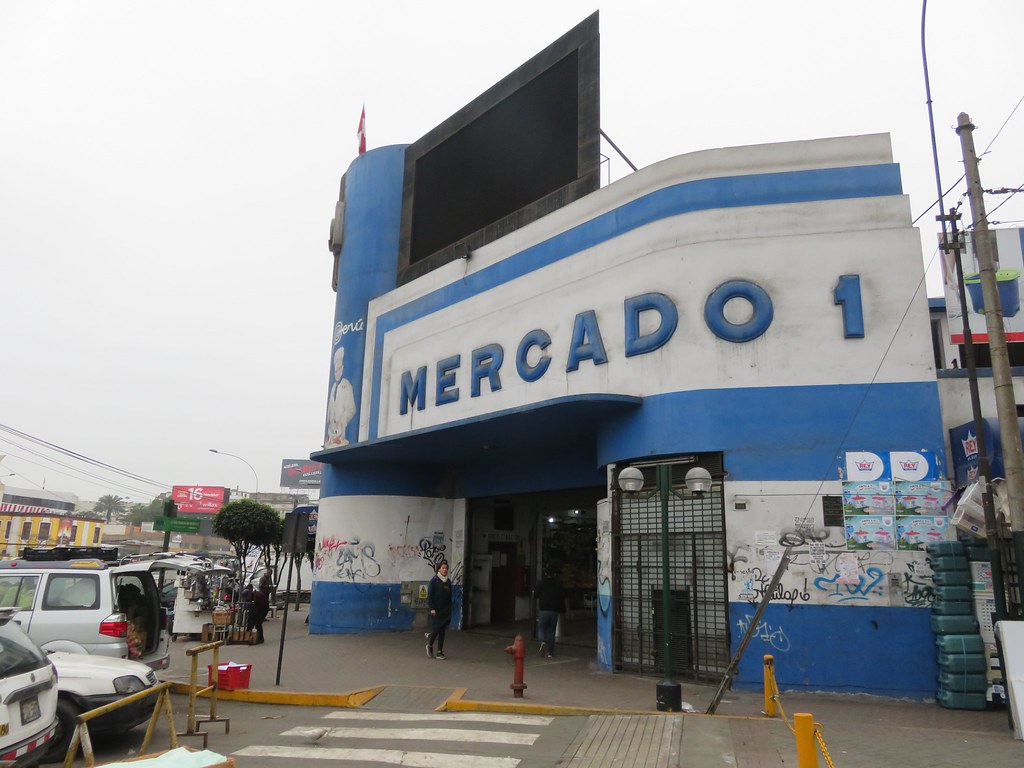
Surquillo Market is the food lover’s essential
The Mercado de Surquillo sits just south of Miraflores, close enough to walk to from most accommodations in the district, and it is one of the most lively places I visited in Lima. Two floors of everything the Peruvian kitchen requires the varieties of potato that exist nowhere else in the world (Peru has over three thousand named varieties; the supermarket gives you six), the fresh ají amarillo and ají panca and ají rocoto that give Peruvian cooking its specific heat and fruit and flavour, the enormous fresh fish brought in from the Pacific that morning, the herbs and greens and roots that do not have English names because they have not needed them.
Go in the morning. The market is busiest and most alive between seven and eleven, before the heat of the day and before the best produce has been taken. Walk the whole thing before you buy anything, get your bearings, see what is there, notice what the people shopping alongside you are choosing. Then go back to the stalls that interested you.
The food stalls on the upper floor serve breakfast and early lunch to the market workers and the neighbourhood residents. This is where you eat if you want the experience of a meal that was not designed for you a bowl of caldo de gallina, a plate of lomo saltado, a ceviche made from whatever came off the boat that morning, priced for the people who work in the building rather than the people visiting it. Point at what the person next to you is eating if the menu is unclear. This always works.
Surquillo Market is a fifteen-minute walk from central Miraflores. Avoid taking valuables or expensive cameras conspicuously not because the market is dangerous, but because every market in every city rewards the visitor who looks like they belong rather than the one who looks like they are documenting.
Las Palmas Market Barranco’s neighbourhood market
Less visited than Surquillo and with a more residential character, the Las Palmas market in Barranco is the kind of local market that reminds you why neighbourhood markets exist in the first place. The scale is human. The vendors know their regulars. The produce is good and the prices are honest, and the atmosphere is entirely unperformed.
Pair a visit here with a morning walk through Barranco, the streets are beautiful in the early light, before the cafés have fully opened and before the tourist foot traffic has arrived, and the market gives you a reason to be out at that hour that is more purposeful than just wandering.
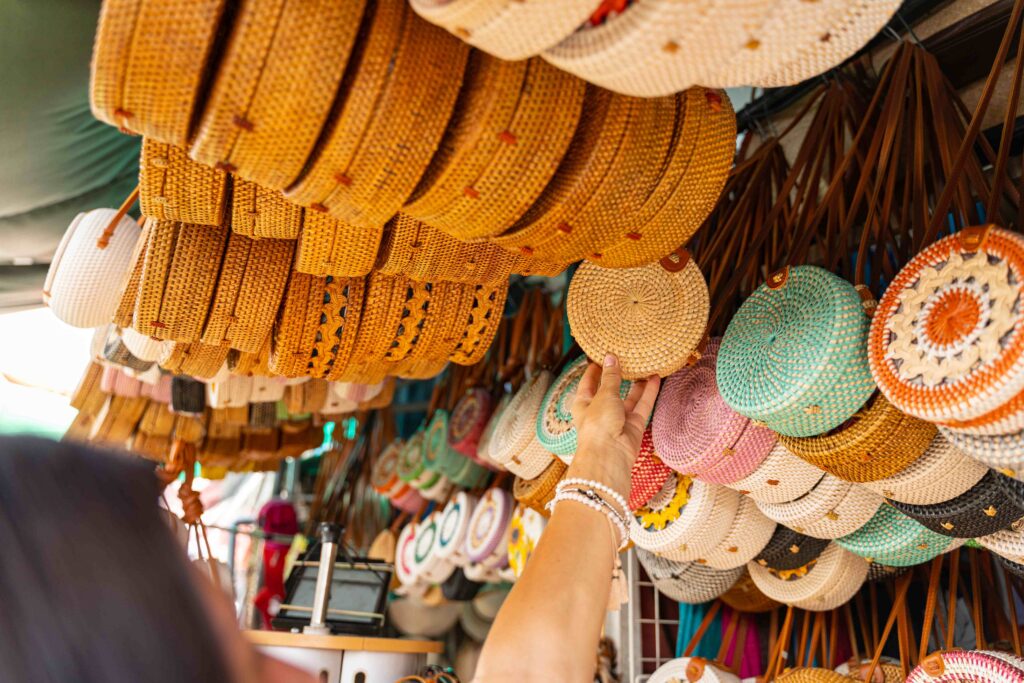
Central Market Lima Chinatown and the historical heart
The Mercado Central in Lima’s historical centre occupies a vast covered hall near the Plaza Mayor and has been feeding the city since the nineteenth century. It is chaotic, loud, dense with colour and smell and the particular energy of a market that has never once considered whether it might be more convenient to be a supermarket.
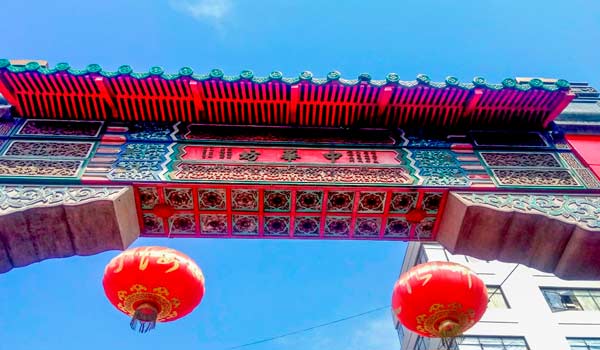
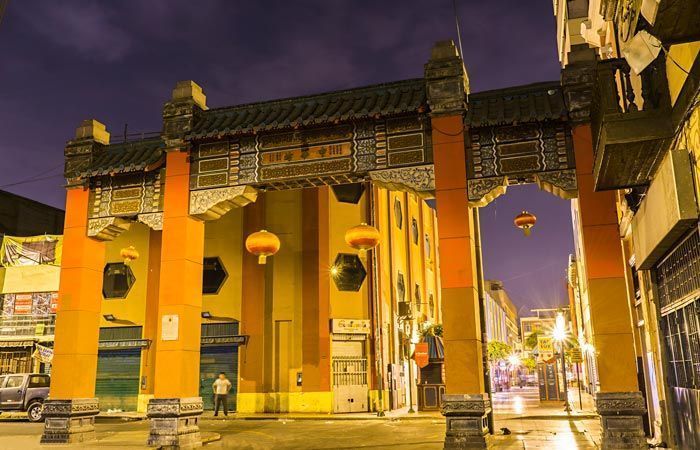
The central market sits at the edge of Barrio Chino Lima’s Chinatown, one of the oldest Chinese communities in South America. Walk through the market and into the neighbourhood, and the evidence of that history is everywhere: in the restaurant signs, in the ingredients at the stalls, in the chifa restaurants that have been cooking Peruvian-Chinese fusion for longer than most other places in the world have known what Peruvian-Chinese fusion is.
Eat a chifa lunch here if you can not at one of the tourist-facing restaurants on the main street, but at one of the smaller places on the side streets, where the tables are full of local workers at noon. Arroz chaufa, tallarin saltado, wonton soup with Peruvian chilli, this is the food of a community that arrived in a new country and built something entirely its own from what they found there. It is extraordinary.
Ocean Walks: The Cliff Edge and What It Gives You
Lima sits on Pacific-facing cliffs between fifty and eighty metres high, and the clifftop walkways the Malecón are where the city goes to breathe. I have written about the Malecón in depth in the Miraflores guide, so I will not repeat all of it here. What I want to talk about instead is what the walk gives you when you approach it not as a tourist attraction but as a daily practice.
I walked the Malecón every day I was in Miraflores. Sometimes with a destination in mind. Sometimes not. And I can tell you that the walk is different at seven in the morning, when the coastal mist is still burning off and the joggers are out and the city has not yet started performing for the day, than it is at noon, when the sun is high and the tourists are photographing the El Beso sculpture and the paragliders are making their wide circles above the water.
The seven o’clock walk is the one worth setting your alarm for. Bring nothing in particular. Walk south toward Barranco or north toward San Isidro. Stop at the viewpoints when the mood takes you. Watch the surfers in the water below the Costa Verde beaches at the base of the cliffs catch a consistent Pacific swell, and the surfers are there early, moving through the grey water with the confidence of people who have done this every morning for years.
The sunset I did not plan for
I want to tell you about the evening that changed how I thought about Miraflores.
I had no particular plans for that evening. I had been walking for most of the day the historical centre in the morning, a long lunch somewhere I cannot now remember the name of, an afternoon that drifted through Miraflores without much intention. I found myself at the edge of the Malecón at around five o’clock, not because I had planned to be there for sunset but because that is simply where I was when the light started to change.
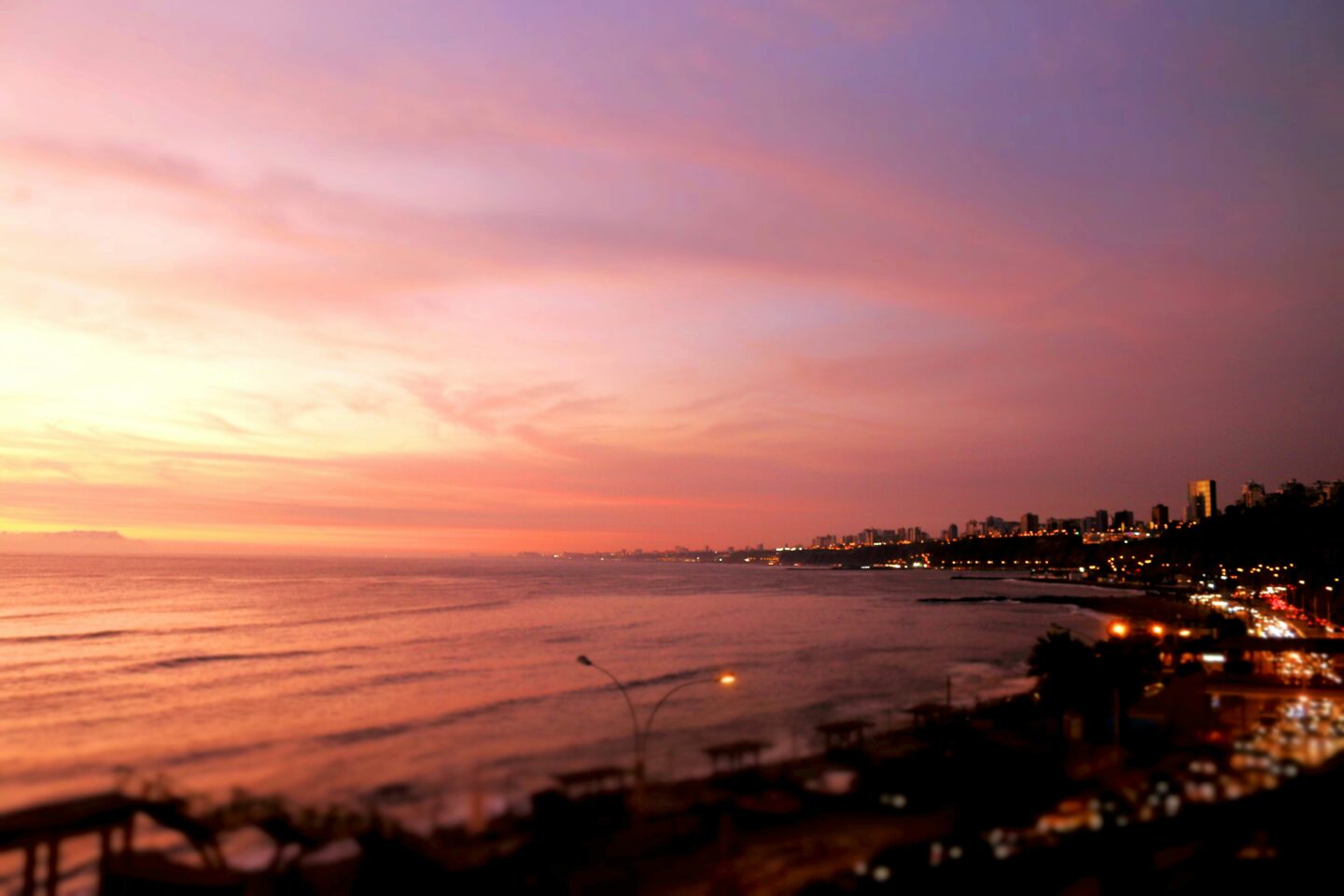
I sat on one of the mosaic benches at the Park of Love and watched what the sky did over the next forty minutes. There are no adequate words for the colour of a Lima sunset over the Pacific when the conditions are right. The sky moved through shades of orange and rose and a deep amber that seemed to come from somewhere inside the light itself rather than from the surface of things. The ocean went dark beneath it. The silhouettes of the paragliders crossed the sun as it descended.
I had caught sunsets by design all over the world, deliberately positioned, camera ready, aesthetically composed. This one found me. And it was better than all of the ones I had chased.
The lesson I took from it: walk the Malecón in the late afternoon without a plan. Face west. Something will happen.
The Larcomar cliff and what it shows you
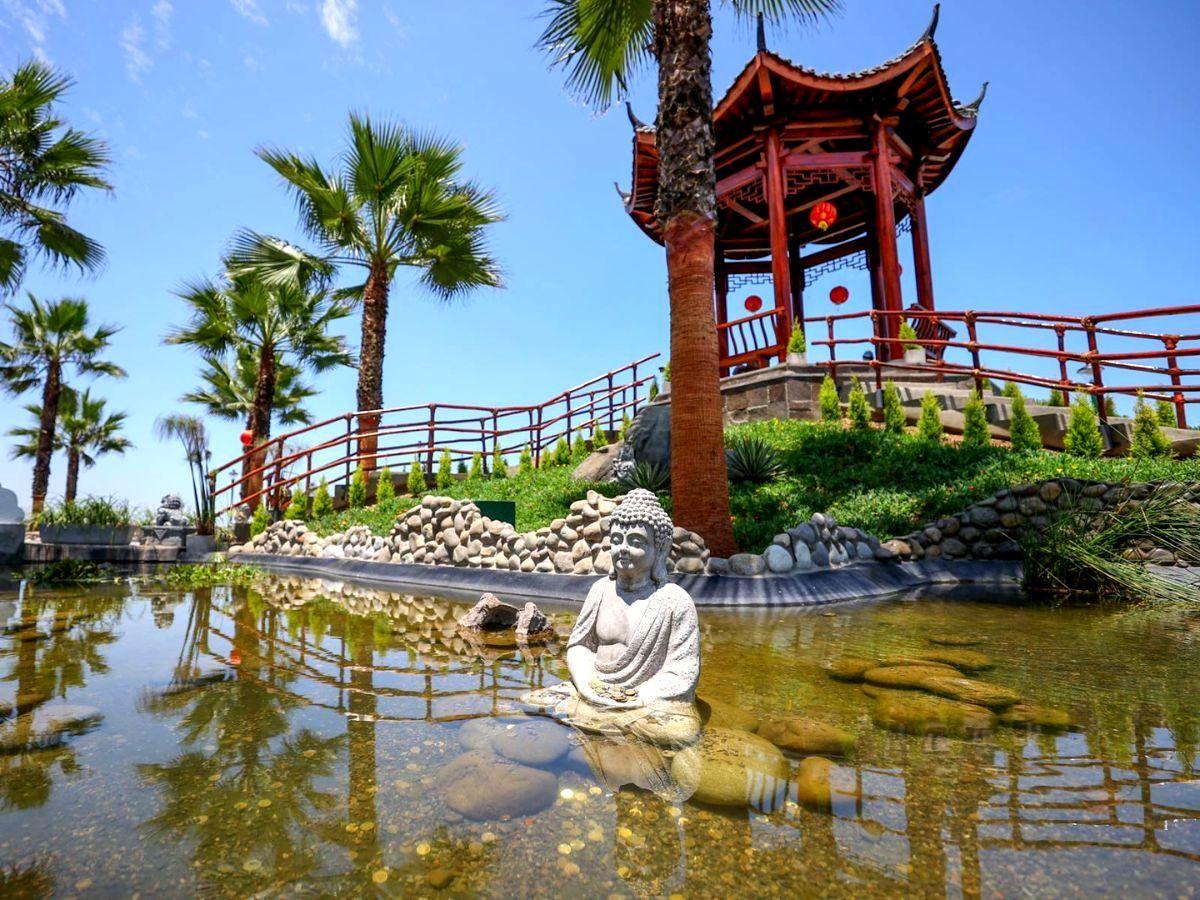
The Larcomar shopping centre, built into the cliff face at the southern end of Miraflores, has a set of terraces that give you a perspective on the Lima coastline that you cannot get from the Malecón level. You are looking both down at the cliff face and out toward the horizon simultaneously, and the combination, especially as the light changes in the late afternoon, produces a view that justifies the short walk entirely.
The practical thing about Larcomar is that it also has good cocktail bars with that view. A Pisco Sour at the right terrace bar as the sun goes down is not a tourist cliché. It is simply a good decision, and I will defend it.
The Costa Verde below the cliffs
Most Miraflores visitors stay at the clifftop level. The Costa Verde, the strip of beaches and restaurants at the base of the cliffs, is a different Lima entirely. The beach here is grey sand, and the Pacific is cold, and the restaurants that line the coast road have the particular ease of places that have been serving the same clientele for decades.
Drive or take a taxi down the winding road from the clifftop and spend a morning here. The surfers are closer. The scale of the cliffs, seen from below, is dramatic in a way you cannot appreciate from the top. The beachside restaurants serve fresh seafood in a casual, unpretentious way that is sometimes exactly what you want after several days of the more refined Miraflores dining scene.
Museums: The Lima That History Built
Lima has more museums than most visitors ever have time for, and the quality of the best of them is genuinely world-class. Below are the ones worth your time not because they are famous, but because they will change what you understand about Peru and about the people who built it.
Larco Museum pre-Columbian art and the collection you did not expect
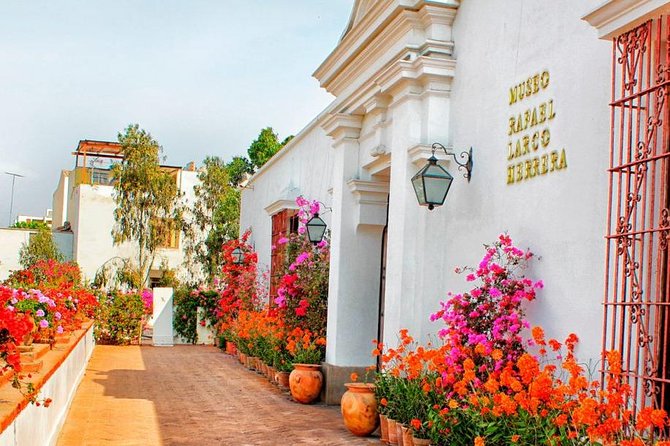
The Museo Larco sits in a beautiful colonial mansion in the Pueblo Libre district, surrounded by gardens, and houses one of the most significant private collections of pre-Columbian art in the world. Its permanent collection spans five thousand years of Peruvian history, ceramics, gold work, textiles, jewellery assembled with a care and intelligence that gives the visitor a genuine sense of the civilisations that produced them.
The ceramics collection is extraordinary in its range and its specificity. The pre-Inca cultures of coastal Peru were master potters, and the pieces here include portrait vessels faces of real individuals rendered with a psychological accuracy that is startling from objects made fifteen hundred years ago alongside vessels depicting scenes of daily life, ritual, and narrative that function as historical documents in clay.
The section of the collection that draws the most attention from guides and visitors alike is the erotic gallery a separate room housing ceramics that depict sexual acts with the same matter-of-fact specificity as the daily life scenes elsewhere in the collection. It is included here not as a curiosity but as context: these objects were made by cultures for whom sexuality was part of the whole fabric of life rather than something requiring a separate room with a warning on the door. The gallery is thoughtfully curated and genuinely interesting.
Allow at least three hours for the Larco Museum. The garden café is excellent for lunch.
The Larco Museum is in Pueblo Libre, approximately twenty minutes by taxi from Miraflores. Book a guided tour if you want the collection to make full sense. The curatorial labels are good, but a knowledgeable guide will connect the objects to the history in a way that transforms the experience.
National Museum of Archaeology, Anthropology, and History of Peru
Also in Pueblo Libre, within walking distance of the Larco Museum, the National Museum is the largest and most comprehensive museum of Peruvian history in the country. Its collection spans pre-ceramic cultures through the Inca empire and into the colonial period, and the depth of it, with thousands of objects, each representing a chapter in the extraordinary complexity of Peruvian civilisation, is genuinely overwhelming in the best sense.
If the Larco Museum gives you the aesthetic experience of Peru’s pre-Columbian past, the National Museum gives you the historical and anthropological framework. The two complement each other well enough that visiting both on the same day, perhaps the Larco in the morning, the National Museum in the afternoon, is a rewarding way to spend a full day in Lima without leaving a single neighbourhood.
MALI Museum of Art of Lima
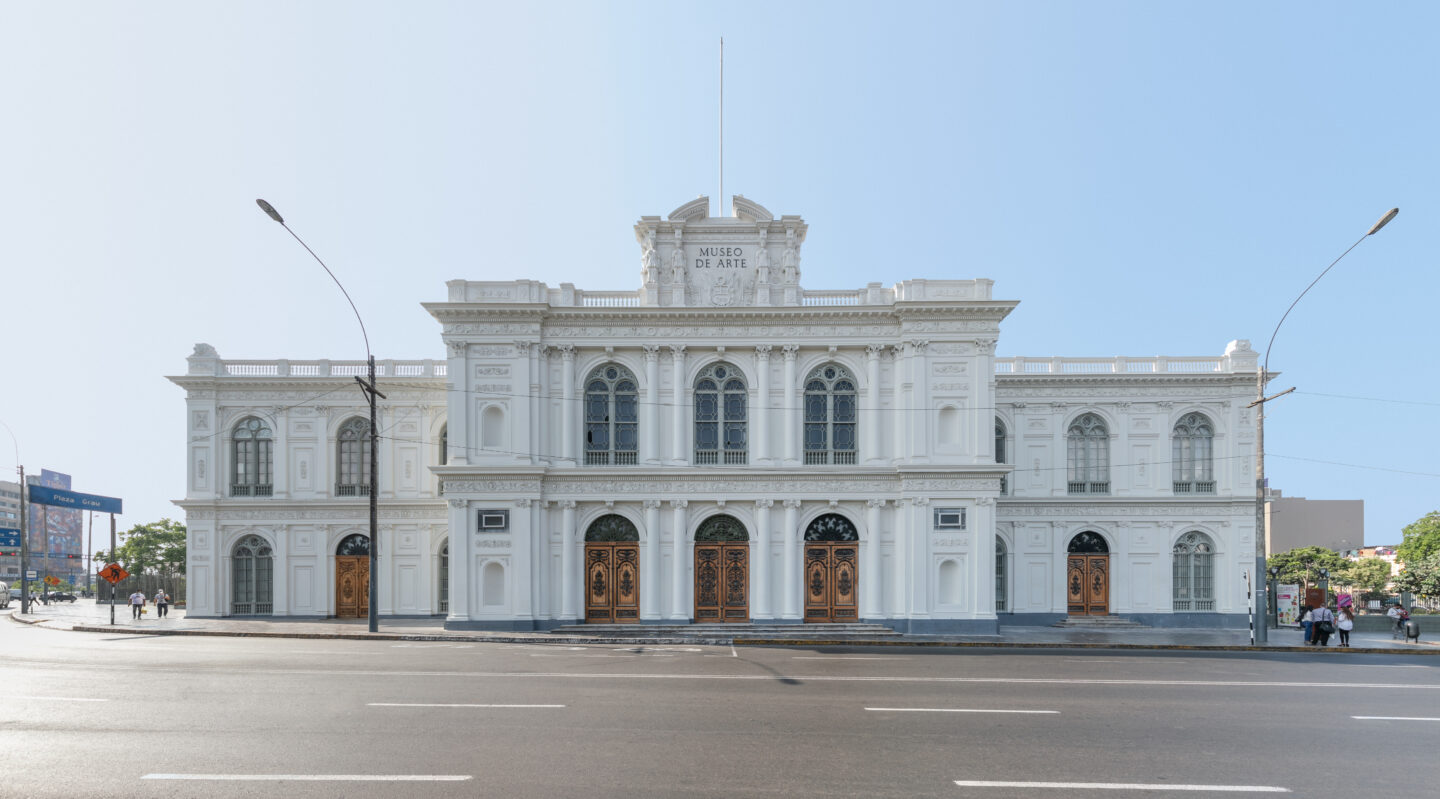
The Museo de Arte de Lima occupies a beautiful nineteenth-century building in the Cercado de Lima district and houses a collection that spans three thousand years of Peruvian visual art from pre-Columbian textiles and ceramics through colonial painting and into twentieth-century Peruvian modernism.
What I find most interesting about MALI is not any single section of the collection but the way the whole thing is organised: as a continuous narrative of Peruvian visual culture, in which the pre-Columbian, the colonial, and the modern are presented as a single story rather than as separate and unrelated chapters. This framing of Peru’s art history as a continuous conversation between past and present is a generous and intelligent way to think about a culture whose colonial disruption might otherwise appear as a break in the narrative.
The building itself is worth the visit even before you enter the galleries. The grand salon, the staircases, the proportions of the public rooms, this is Lima’s nineteenth-century confidence made architectural.
MATE Mario Testino Art Gallery, Barranco
The MATE museum in Barranco is housed in a lovingly restored colonial building and celebrates the work of Peru’s most internationally celebrated photographer, Mario Testino. His fashion photography, spanning decades of work for Vogue, Burberry, Gucci, and every major fashion house, shares the gallery with contemporary Peruvian photography and visual art.
What makes MATE worth visiting beyond the prestige of the name is the way it connects Peruvian identity to international creative culture. Testino’s work is full of Peru in the subjects, in the light, in the way he photographs people who feel genuinely present in the frame rather than posed for it. Seeing that work in Lima, in a Barranco house, with the city visible through the gallery windows, gives it a context that an exhibition elsewhere in the world would not have.
The museum is small enough to explore in ninety minutes and is best visited as part of a longer Barranco afternoon that includes the Puente de los Suspiros, the street art, and dinner in the neighbourhood.
The Natural History Museum for the curious and the thorough
Less visited than the archaeology and art museums, the Natural History Museum of the Universidad Nacional Mayor de San Marcos is one of those places that reveals the full depth of what Peru is beyond its human history. The collections of Andean and Amazonian flora and fauna, including the extraordinary biodiversity of ecosystems that range from coastal desert to high Andes to the edge of the Amazon basin, all within the territory of a single country, are genuinely fascinating.
This is a museum for the curious rather than the obligatory. If you have a natural history interest or simply want to understand the physical world that produced the civilisations you have been learning about in the other museums, spend a morning here.
The Historical Centre: Lima’s Real Depth
If I could make one addition to every Lima itinerary I see, it would be this: spend a full morning in the centro histórico with a good guide. Not an afternoon. A full morning, starting early, with someone who knows the history and can give you the narrative rather than just the names of buildings.
I did this, and it was one of the days in Lima that I remember most clearly not because of any single thing I saw, but because of the way all of the things fit together into a coherent story about what this city is and how it came to be.
The walking tour I took and what it gave me
We started at the Plaza Mayor the Plaza de Armas which is where all Lima’s history begins. The square was laid out by Francisco Pizarro in 1535 when he founded the city, and its bones are still essentially those of a Spanish colonial capital: the cathedral on one side, the Archbishop’s Palace on another, the Government Palace on the third. The geometry of power, arranged in stone, for anyone paying attention.
Our guide a local historian who had been doing these tours long enough that the history had become personal to him did not start with the buildings. He started with the ground. The Plaza Mayor sits on top of Inca structures, which sit on top of earlier structures, which sit on top of the oldest layers of human habitation in this part of the coast. Lima is not a colonial city built on empty land. It is a colonial city built on top of everything that came before it, and the Spanish knew exactly what they were doing when they placed their cathedral on the foundations of Inca temples.
This is the framing that changes the historical centre from a collection of old buildings into something worth understanding. Every structure here is an argument about who has power, whose story is told, whose is suppressed, and how the people who came after the conquest have worked to reclaim the narrative.
The catacombs of the Convent of San Francisco
Beneath the church and convent of San Francisco, which sits near the Plaza Mayor and dates from the seventeenth century, there is a network of underground passages that served as Lima’s primary burial ground during the colonial period. Approximately seventy thousand people were interred here over the centuries, and the ossuary chambers, where bones were arranged by type into geometric patterns, are one of the more extraordinary historical spaces I have stood in anywhere.
I want to describe what it actually feels like, because most descriptions of the catacombs focus on the macabre aspect the bones, the underground passages, the scale of it, without capturing why the experience is genuinely moving rather than simply dramatic.
What I felt, standing in the ossuary chambers with the guide’s torch illuminating the arrangements of skulls and long bones, was the particular weight of historical scale. These are the remains of seventy thousand individual people each with a name, a family, a specific life lived in this city over three centuries of colonial history. The ossuary does not individualise them. It cannot. But the sheer volume of what is there forces a reckoning with the reality of what three centuries of a city’s dead actually looks like when gathered in one place.
The convent above ground is beautiful and worth the tour on its own terms the colonial cloister, the library, the paintings. The catacombs are the reason to go.
The catacombs tour runs with a guide and takes approximately one hour. It is not recommended for those with claustrophobia or significant anxiety about enclosed spaces. For everyone else, it is one of the most historically resonant things you can do in Lima.
The Chinatown district, Barrio Chino
Lima’s Chinatown sits at the edge of the historical centre, accessible on foot from the Plaza Mayor, and is one of the oldest established Chinese communities in South America. The first significant wave of Chinese immigrants arrived in Peru in the 1850s, brought as labourers after the abolition of slavery, and what they built from that particular beginning a community, a cuisine, a cultural presence that has shaped Lima in ways that cannot be separated from the city’s identity, is a story worth knowing.
Walk through the gate on Calle Capón and into the neighbourhood. The restaurants on the main street are the obvious option, but the better chifa is on the side streets, at the places with the handwritten menus and the tables that are full of local workers at noon. Order arroz chaufa, Peruvian fried rice and tallarin saltado, and understand that this food is not an import. It is something that was created here, by people who arrived with one culinary tradition and found themselves in the presence of another, and built something new from both.
Walking through the historical centre off the main route
Most walking tours of the historical centre cover the Plaza Mayor, the Cathedral, the Convent of San Francisco, and perhaps the Barrio Chino. This is the correct starting point. But the historical centre has more layers than a two-hour tour can reveal, and the visitor who wanders slightly off the main route will find them.
The Jiron de la Unión Lima’s main pedestrian street runs from the Plaza Mayor toward the Plaza San Martín and is lined with a mixture of colonial architecture, twentieth-century commercial buildings, street vendors, and the particular energy of a pedestrian street in a Latin American capital at midday. It is not beautiful in the way that the curated tourist areas are beautiful. It is alive in the way that living cities are alive, and that is better.
The Plaza San Martín, at the southern end of the Jiron, is named for the Argentine general who helped liberate Peru from Spanish colonial rule and is surrounded by early twentieth-century buildings that reflect Lima’s republican-era ambitions. The Gran Hotel Bolívar on the plaza’s eastern side is one of the most beautiful buildings in Lima its entrance hall alone is worth a visit and its bar has been serving pisco sours to Lima’s political and intellectual class since 1924.
Eating Like a Local: Places Without English Menus
Let me tell you the most important thing I know about eating in Lima: the best food is at the places that do not need to advertise to you.
The restaurants that have English menus and photographs on their signs and staff who greet you in English at the door are good, some of them excellent, and I am not suggesting you avoid them. I am suggesting that they represent one version of Lima’s food culture the one that has been prepared for your arrival. There is another version, equally good and sometimes better, that has not been prepared for you at all.
The menú del día is the daily set lunch that most Peruvian cook shops and small restaurants serve from approximately noon to three o’clock. It consists of a soup course, a main course, a small dessert, and often a glass of chicha morada the purple corn drink that is ubiquitous in Lima and deeply delicious for a price that ranges between ten and twenty soles depending on the neighbourhood and the ambition of the kitchen.
The menu changes daily based on what was at the market that morning. There is no choice you eat what is being served, which is the correct way to eat in any city where the cook knows more than you do about what is good today. The soup is always good. The main course is always abundant. The whole experience is an instruction in what Peruvian home cooking actually is, as opposed to what it is when it has been prepared for a restaurant context.
Walk into any cook shop in the historical centre or in a residential neighbourhood around noon. The ones with handwritten boards outside listing the day’s menu are exactly what you are looking for. Sit down. Order the menú. Pay attention to what is on the table.
The experience our local friend gave us
On the second day, our Lima connection took us somewhere for lunch that I will not name here because the joy of it is in the finding.
What I can tell you is that it was a small restaurant on a side street, reached by a route that I would not have followed without someone who knew where they were going. The menu was on a board behind the counter, written in chalk, and contained approximately four items. We ordered what we were told to order. The food arrived in portions that seemed impossible for a lunch that cost less than most drinks in Miraflores.
I ate a ceviche that I have been thinking about since. Not because it was the most sophisticated ceviche I have had it was not, by the standard of the celebrated Miraflores restaurants. It was the ceviche that was made by someone who has been making ceviche their whole life, for people who know what ceviche is supposed to taste like. The difference between those two things is difficult to articulate and immediately apparent in the eating.
The lesson is not that you need a local friend to eat well in Lima you do not. The lesson is that the version of Lima’s food culture that is most alive is found in the places that are not performing for you. Walk toward the places where you do not immediately understand what is on offer. Order by pointing if necessary. Eat what arrives.

The pisco experience beyond the cocktail
Pisco is Peru’s national spirit, and in Lima you can go significantly deeper into it than a pisco sour on a restaurant terrace which is, admittedly, a very good place to start.
We visited a vineyard on the outskirts of Lima the Ica region, south of the city, is Peru’s primary wine and pisco production area, and there are day trips available that combine the vineyard visit with the Huacachina oasis. The production process for pisco is fascinating on its own terms it is a brandy made from specific grape varieties, distilled once without dilution, which gives it a freshness and directness that aged brandies do not have but it is the tasting that makes the visit worthwhile.
Peruvian pisco has regional variations, grape variety differences, and a range of flavour profiles that most of the world has never encountered because most of what leaves Peru for export is the most commercial expression of the spirit. Tasting the variety in the place where it is made is an experience that cannot be replicated in a cocktail bar.
The Surquillo Market breakfast eating with the vendors
I have already written about Surquillo Market in the markets section, but I want to return to it here because eating there in the morning is one of the most honest food experiences Lima offers.
The food stalls on the upper floor of the market open early and serve breakfast to the people who work in and around the market caldo de gallina (chicken broth with potato and noodles, the Peruvian hangover cure and general-purpose fortification), tamales wrapped in banana leaf, chicha morada, eggs prepared in various ways. The prices are set for the market workers. The portions are set for people who will be on their feet for eight hours.
Sit down at one of the plastic tables. Order by pointing at what the person next to you is eating if the Spanish does not come. Drink the chicha morada. Eat the tamale. Pay attention to the conversations around you, which you will not understand but which are the sound of Lima getting on with its day.
Hidden Gems: The Lima That Most Visitors Miss
The Barranco Bridge of Sighs at seven in the morning
The Puente de los Suspiros the Bridge of Sighs is on every Barranco itinerary, which means that during the day it is never entirely quiet. But at seven in the morning, when the neighbourhood has not yet woken up and the bougainvillaea along the bridge railings is catching the early light and there is no one else there, it is one of the most beautiful five minutes in Lima.
Walk from Miraflores to Barranco along the Malecón it takes about twenty minutes at an easy pace and arrive in the neighbourhood before eight o’clock. The bridge is yours. Walk across it. Follow the Bajada de los Baños down to the beach. Stand at the bottom and look up at the cliff and the bridge and the city above you. Walk back up slowly. Find coffee somewhere that is just opening.
This sequence this particular combination of empty bridge and early light and the smell of the sea and the sound of a city just beginning, is one of the best things Lima has given me, and it cost nothing and required nothing except the decision to get up early.
The Magic Water Circuit an evening surprise
The Circuito Mágico del Agua in Parque de la Reserva is one of those Lima experiences that sounds tourist-trap and turns out to be genuinely delightful. A series of illuminated fountains thirteen in total, spread across a large park in the Cercado de Lima district that run a nightly show of light, water, and music.
The scale of it is the surprise. You expect a modest fountain display and you get something that involves lasers, projections, water curtains, and a main fountain that shoots water sixty metres in the air while the light show plays across it. It holds the Guinness World Record for the largest interactive fountain complex in the world, which sounds like marketing but is simply accurate.
Go on a weeknight to avoid the weekend crowds. Arrive slightly before the evening show begins. Allow yourself to find it more impressive than you expected. This is allowed.
The Magic Water Circuit operates in the evenings only, typically from 7:30 pm to 10:30 pm, with shows running throughout. Check current operating hours before you go, as these vary by season and day of the week.
Miraflores mirador viewpoints, the ones not on the maps
The official miradóres along the Malecón are beautiful and worth visiting. But Miraflores has several clifftop viewpoints that are not on the tourist maps, reached by turning down residential streets toward the cliff edge and finding the gaps in the urban fabric where the sea suddenly appears.
I found one of these entirely by accident, following a street that seemed to be heading nowhere in particular until it ended at a small open area at the cliff edge with three benches facing the Pacific and absolutely no signage of any kind. A woman was sitting there reading. A couple were talking quietly. The view was as good as anything on the official Malecón, and there was nobody taking photographs.
The way to find these places is not on a map. It is to walk toward the ocean in Miraflores whenever you have the opportunity, and to follow any street that points roughly west and seems to be ending somewhere. Lima’s cliff edge is long and irregular, and not all of it has been packaged for visitors.
Barranco’s side streets the gallery that has no walls
Barranco’s street art is described in every guide, but the experience of walking through it is different from reading about it. What makes it remarkable is not the individual pieces, though some of them are extraordinary but the density of it. Turn into any alley in Barranco and you are in a gallery. The walls are the exhibit. The neighbourhood is the curator.
Walk without a destination. Turn where the art takes you. The residential streets behind the main tourist route through Barranco are full of murals that nobody has put on a list because there are too many of them to list, and they change regularly. A wall that was bare last month has something on it this month. A piece that was there last year has been painted over and replaced with something new.
Barranco treats its walls as a public resource and its street artists as contributors to a collective ongoing project. This is not a street art district that has been created for tourism. It is a neighbourhood that has been making things on its walls for long enough that the making has become part of what the neighbourhood is.
The Miraflores cliffs from the water
If you have time and the inclination, take a boat trip from the Costa Verde beaches that gives you a view of the Lima cliffs from the sea. This is a specific and unusual perspective on the city the cliffs rising from the water, the buildings of Miraflores visible at the top, the scale of the whole thing apparent in a way that is impossible to appreciate from land.
Fishing boats and small tour operators offer sea trips from the Costa Verde. Ask at the beach or arrange through your accommodation. This is not a widely advertised tourist experience, which is part of why it is worth doing.
Lima by Neighbourhood: Understanding the City’s Character
Lima is not one city. It is several cities occupying the same geography, and understanding the distinct character of each neighbourhood will help you move through Lima with intention rather than simply covering distance.
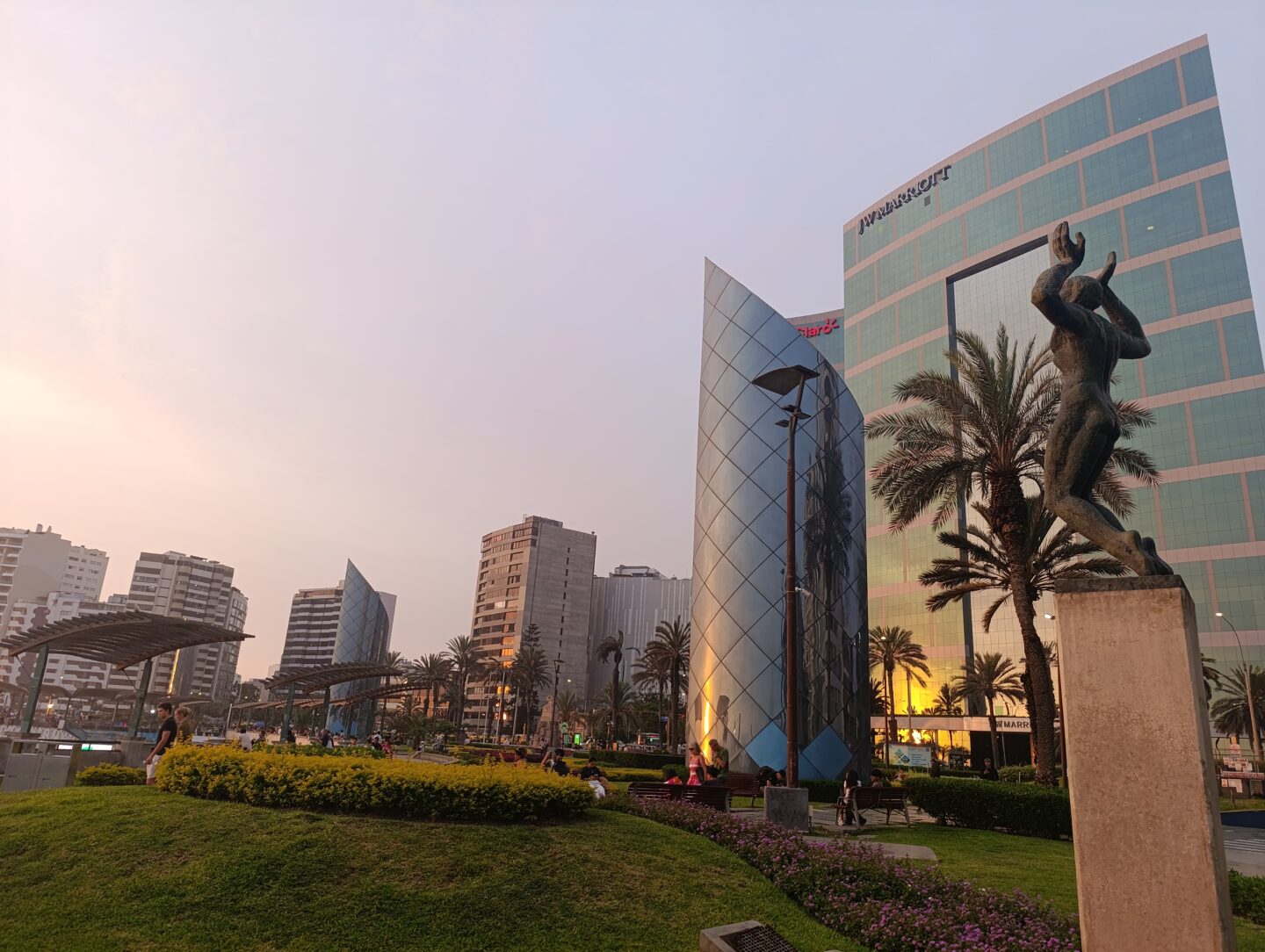
Miraflores is the comfortable base
Miraflores is where most visitors stay and where the tourist infrastructure is concentrated. It is polished, walkable, and safe. Its restaurants are excellent and its clifftop views are genuine. It is also the Lima that has been most prepared for your arrival, which means it is the most comfortable and the least surprising. Use it as a base. Do not confuse it with Lima.
Barranco the artist’s city
Barranco is the neighbourhood that surprises people who are prepared to let it. Bohemian, creative, slightly faded, intensely local despite the tourist interest in its street art and restaurants. The best evenings in Lima are in Barranco. The best mornings are also in Barranco, when the tourists have not yet arrived and the neighbourhood is simply itself.
San Isidro, the financial district with gardens
San Isidro is Lima’s financial and diplomatic district, with embassies, corporate headquarters, and upscale residential streets. It is not, at first glance, a neighbourhood for the traveller seeking cultural immersion. But its parks are excellent. The Olivar forest, a grove of centuries-old olive trees in the middle of the urban fabric, is one of the more improbable and lovely places in Lima, and its restaurants include some of the finest in the city.
Pueblo Libre, the museum neighbourhood
Pueblo Libre is the neighbourhood where the Larco Museum and the National Museum sit, and it is significantly less visited than Miraflores or Barranco despite having a pleasant, residential character and good food. A day spent between the two museums, with lunch at the Larco café and an afternoon walk through the neighbourhood, is one of the more rewarding days Lima offers.
The historical centre, the oldest in Lima
The Cercado de Lima, the historical centre, is dense, loud, commercial, and full of the most significant historical sites in the city. It is not as comfortable as Miraflores, and it requires more awareness from the visitor. But it is also the most alive part of Lima in the sense of the word that matters: the most full of history, the most layered, the most honest about what this city actually is.
Practical Notes for the Cultural Immersion Visitor
Getting around Lima
Uber is reliable, affordable by international standards, and available throughout Lima. For most journeys between Miraflores, Barranco, San Isidro, and the historical centre, Uber is the practical choice. The Metropolitano rapid transit bus runs efficiently between the historical centre and the southern districts and is worth using for that specific journey.
Lima traffic is genuinely significant and should be factored into all timing. A journey that looks like twenty minutes on a map can take fifty minutes in traffic. Leave early, be flexible, and enjoy the city you see from the window.
Language
Spanish is the operating language of Lima, and outside of the tourist infrastructure of Miraflores, English is not widely spoken. This is not an obstacle it is an invitation. A small vocabulary of Spanish phrases and a willingness to communicate by pointing, gesturing, and smiling will take you further than you expect. The effort is always appreciated.
A few particularly useful phrases: ¿ ¿Cuánto cuesta? (How much does it cost?), Una mesa para uno/dos, por favor (A table for one/two, please), ¿Qué recomienda? (What do you recommend?), and the universal travel phrase: Lo siento, no hablo español I’m sorry, I don’t speak Spanish, which at least communicates goodwill.
Safety
Lima is a large city and the standard urban awareness applies be thoughtful about where you carry your phone, be aware of your surroundings in crowded areas, and use Uber or official taxis rather than flagging random vehicles after dark. Miraflores and Barranco are among the safest urban areas in Lima. The historical centre requires more awareness, particularly in the evening, but is manageable during daylight hours with the usual care.
The cultural immersion approach to Lima eating in local restaurants, walking through market neighbourhoods, visiting less tourist-facing areas does not increase your safety risk in any meaningful way. It simply requires the same awareness you would bring to any city you do not yet know well.
Travel insurance
Always, everywhere. SafetyWing travel insurance.
A Sample Four-Day Lima Itinerary for the Cultural Traveller
This is how I would structure four days in Lima for the traveller who wants depth rather than coverage.
Day one arrive and ground yourself
Morning: arrive, check in, walk toward the Malecón without a destination. Let the city arrive before you try to understand it.
Afternoon: Miraflores neighbourhood walk Parque Kennedy, the artisan market, the clifftop. Stop when something interests you.
Evening: find a cook shop near your accommodation and eat the menú del día. Drink the chicha morada.
Day two the historical centre
Full morning: walking tour of the historical centre with a guide. Plaza Mayor, the Cathedral, the catacombs of San Francisco, Chinatown. Lunch at a market stall or chifa restaurant in Barrio Chino.
Afternoon: rest, or walk the Jiron de la Unión. Evening: Barranco for dinner find a restaurant on a side street rather than the main tourist strip.
Day three museums and markets
Morning: Surquillo Market for breakfast among the vendors. Then taxi to Pueblo Libre for the Larco Museum.
Lunch: the Larco café. Afternoon: National Museum of Archaeology.
Evening: return to Miraflores for sunset on the Malecón. Cocktails at Larcomar.
Day four Barranco deep dive
Morning: walk from Miraflores to Barranco along the Malecón. Arrive early. The Bridge of Sighs before the tourists. Coffee in a café that is just opening.
Afternoon: MATE museum, the Bajada de los Baños, the street art streets without a map.
Evening: Ayahuasca Bar or Hotel B Rooftop for the view. Dinner in Barranco. Walk back along the cliff.
Frequently Asked Questions
How many days do I need in Lima to get beyond the tourist trail?
A minimum of three days, though four is better. The first day almost always involves the familiar tourist orientation. The second day is where the city starts to reveal itself. The third and fourth days are where you begin to understand what Lima actually is. Two days is enough for the highlights. Four days is enough for something real.
Is it safe to walk around Lima’s historical centre?
During daylight hours, yes with the standard urban awareness you would bring to any large city centre you do not know well. The historical centre is dense and busy, which means pockets, phones, and conspicuous valuables need the usual attention. It is not a neighbourhood to walk alone in after dark without local guidance. During the day, with a guide or in a group, it is one of the most rewarding urban walking experiences in South America.
Walk toward residential neighbourhoods rather than tourist streets. Look for handwritten menu boards rather than printed laminated menus. Look for places where locals are eating particularly at lunchtime, when the menú del día is being served. If the restaurant has photographs on the menu, it has already decided who its primary customer is. The places without photographs are often the better ones.
Can I visit all the museums in one day?
Technically yes. Practically, you would do all of them a disservice. The Larco Museum alone deserves three hours of genuine attention. The historical centre deserves a full morning. Give yourself time to actually experience what you are looking at, rather than covering the maximum number of items on a list.
Can I book a consultation to plan my Lima itinerary?
Yes I offer travel consultation calls for Peru trips that include detailed Lima planning. Finding the balance between the major sites and the more local, immersive experiences is exactly the kind of thing that a conversation helps with. Book at destinytravlr.com/work-with-me.
PLAN YOUR LIMA TRIP PROPERLY
Lima rewards the traveller who arrives with curiosity and enough time to let the city show itself. If you want help building an itinerary that goes beyond the tourist trail that balances the museums, the markets, the historical centre, and the moments that are not on any list I offer personalised travel consultations specifically for this kind of trip. Book at destinytravlr.com/work-with-me.
For the complete Peru itinerary Lima through Cusco and Machu Picchu see the full guide on the blog.
Check Out These Links
Tarjeta Andina de Migración (TAM) Virtual
Llaqta Machupicchu
Inca Rail
What to know before visiting Peru
The 10-Day Peru Itinerary (Lima, Cusco & Machu Picchu)
How to Do Machu Picchu Peru
The Complete Guide to Miraflores, Lima
Are You Planning Your Next Trip? Here’s What I Use
These are the tools I rely on to make every trip smoother, safer, and more meaningful. If you use the links below, I may earn a small commission at no extra cost to you. Thank you for supporting this blog and my journey as a full-time traveller 💜
1. Learn the Local Language
I use Babbel to practice Spanish, French, and Portuguese while travelling. The app makes it so easy to learn useful phrases on the go.
2. Travel Insurance is a Must
I never leave home without SafetyWing. They’re affordable and ideal for frequent travellers or digital nomads.
3. Book Your Tours & Experiences
For unique local tours and must-see experiences, I use:
→ Viator
→ Get Your Guide
4. Always Stay Connected
No matter where I go, Keepgo helps me stay connected with international data SIMs and eSIMs that actually work. A lifesaver when Wi-Fi fails!
5. Organise Your Itinerary
I use Tripsy to plan and store my itineraries, documents, and bookings in one clean app. It’s perfect for keeping track of everything in one place.
Until next time, travel softly,
Destiny 💜
