Huacachina & Paracas Day Trip From Lima: Guide (2026)
I almost cancelled this trip.
Two weeks before I was meant to fly to Peru, the client paying for most of my life decided not to renew their contract. Not their fault, wars, markets, the usual chaos that has nothing to do with you and somehow has everything to do with you. The flight was already booked. The Airbnb was already paid for. My excursions were already paid for. And there I was, sitting in Kingston, doing the maths on whether I could afford to have a good time.
I went anyway.
What follows is everything I learned doing the Huacachina and Paracas day trip from Lima the boat ride, the vineyard, the dunes, the sand in my teeth, and what I’d do differently next time.
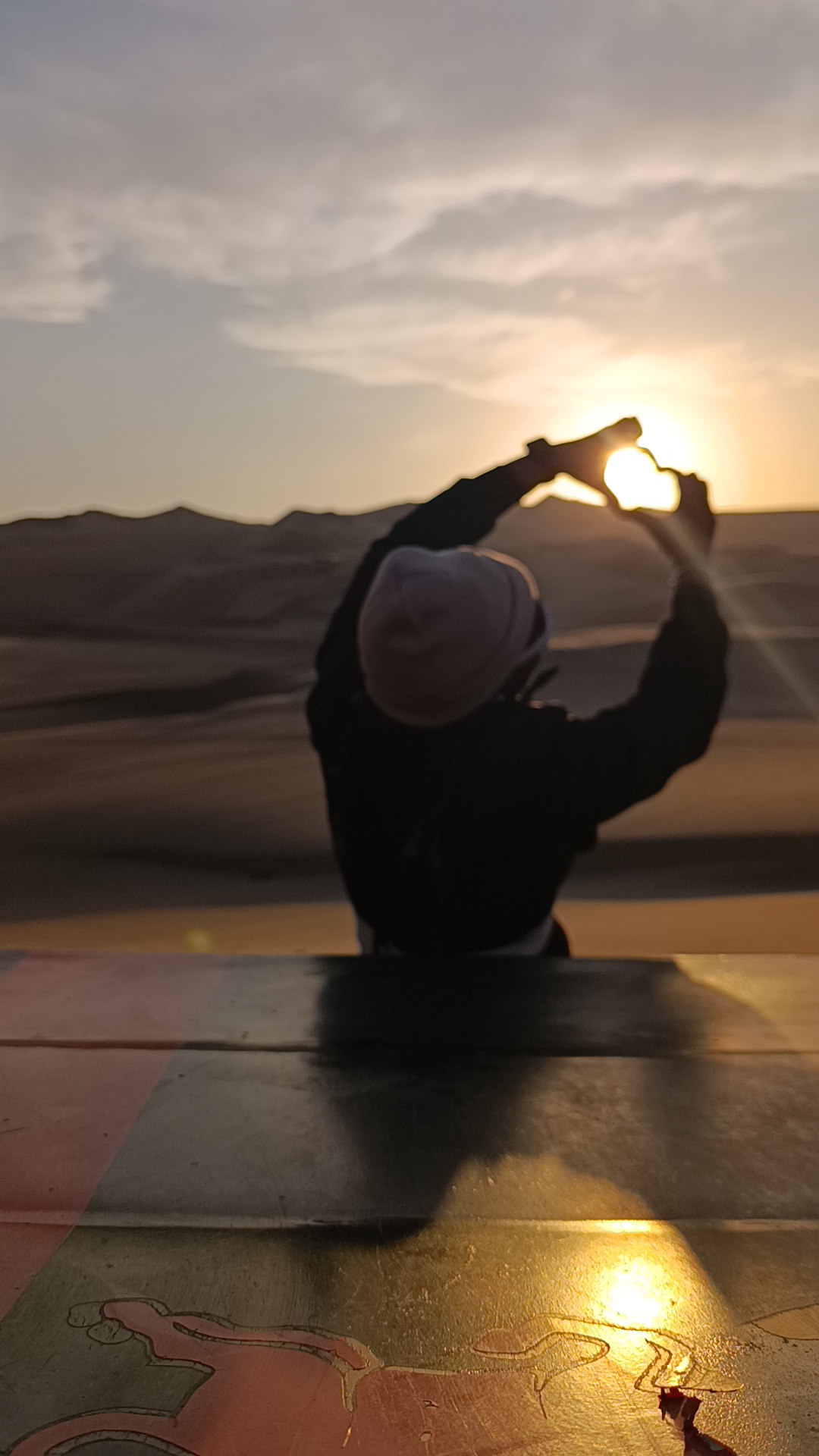
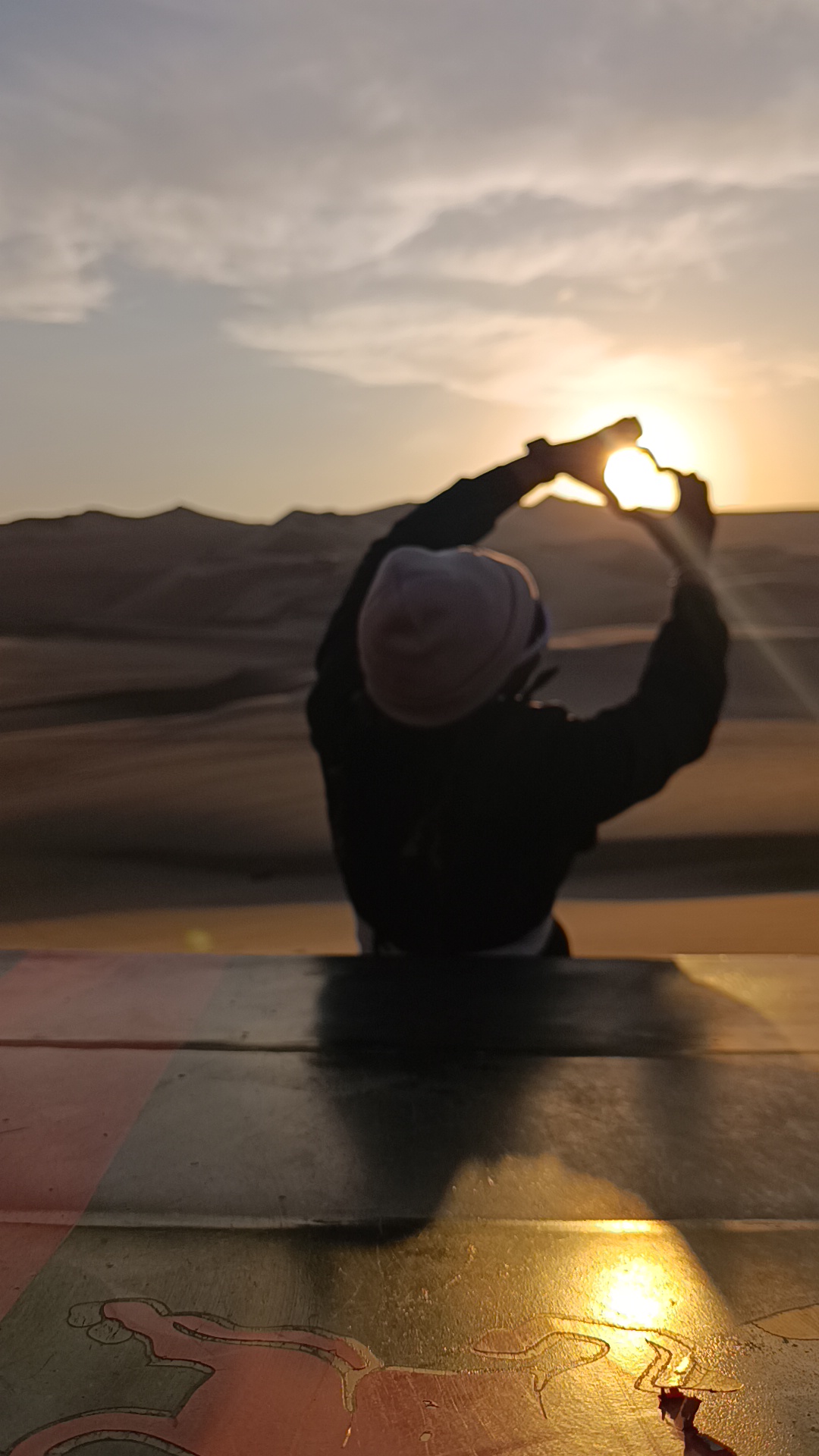
And four days into that trip, standing on top of a sand dune the size of an apartment building, watching the sun spill orange into a desert I never knew Peru had, I remembered something I’d let myself forget. I have never needed millions to have a good time. The desert reminded me. The desert always reminds me.
I have never needed millions to have a good time. The desert reminded me.
If you’re staying in Lima and wondering whether it’s worth the early start to see the sea, desert, and a vineyard in one impossibly long day, let me save you the hassle. It is. Here’s exactly how to do it.
I’m a Jamaican slow traveller. I do not normally cram things into single days. But Huacachina and Paracas, done as a day trip from Lima, is one of the rare cases where the math works out, and I’m going to tell you exactly when it doesn’t, too.
| What it is: A single-day tour from Lima covering the Paracas National Reserve and the Ballestas Islands by boat, a Peruvian vineyard with pisco tasting, and the Huacachina desert oasis with a dune buggy ride and sandboarding at sunset. How long: 14 to 16 hours door to door. It is a long, long day. What it costs: Around $100 to $150 USD per person, depending on the operator and how much luxury you want. Best for: Travellers with one spare day in Lima who want desert, sea, and pisco in one shot. First-timers in Peru. Anyone who can survive an early start and a late return. Skip if: You get severe motion sickness. You hate early mornings in principle. You have more than one day to spare (in which case, see below, I’d genuinely tell you to slow it down). |
Where Are Huacachina and Paracas, Exactly?
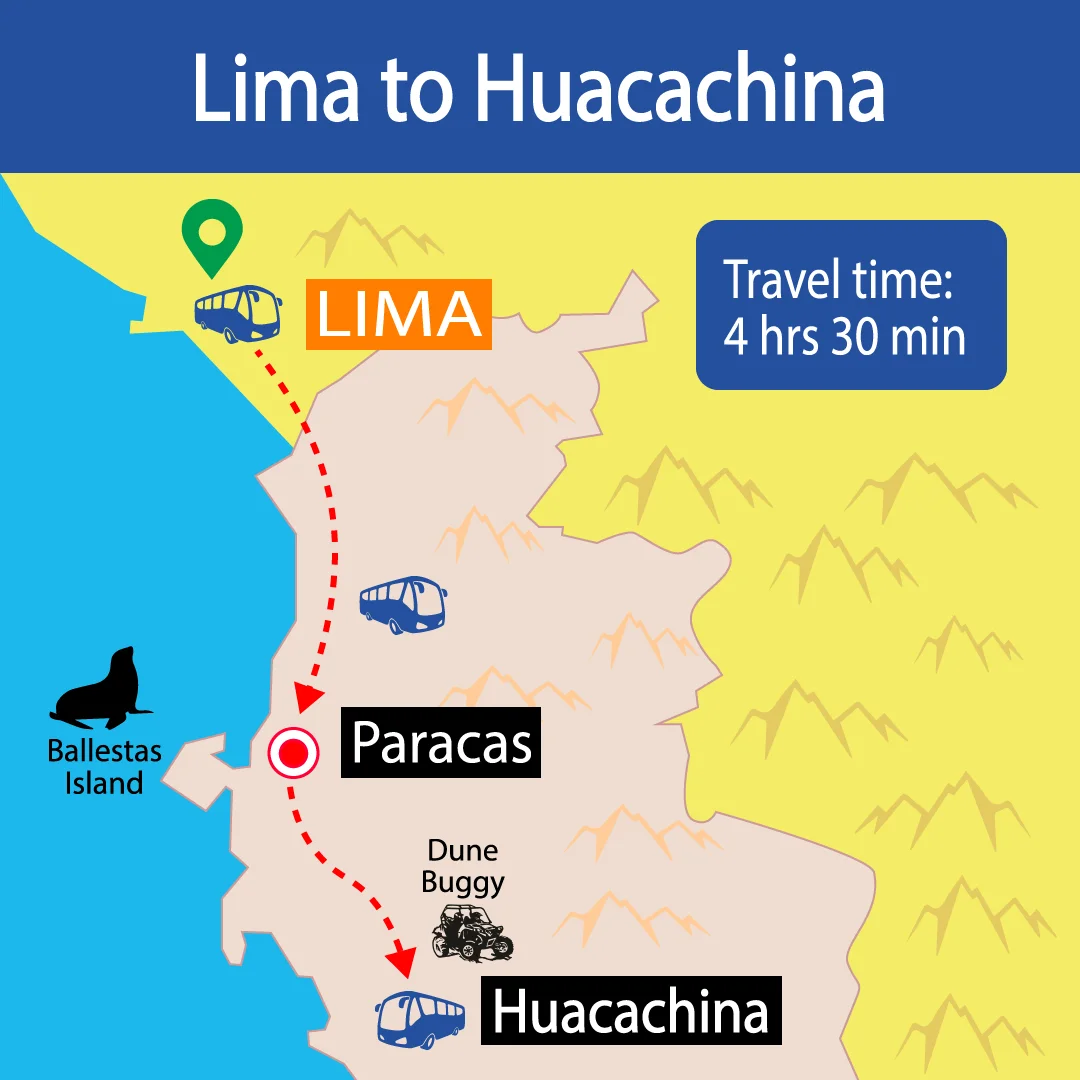
Both are south of Lima, on the Pacific coast.
Paracas is about 250km south of Lima, roughly a 3.5-hour drive. It’s a small fishing town that sits next to the Paracas National Reserve, which protects a stretch of coastline so dramatic it doesn’t look real. The Ballestas Islands, which are what most people actually come for, are about 30 minutes off the coast by boat.
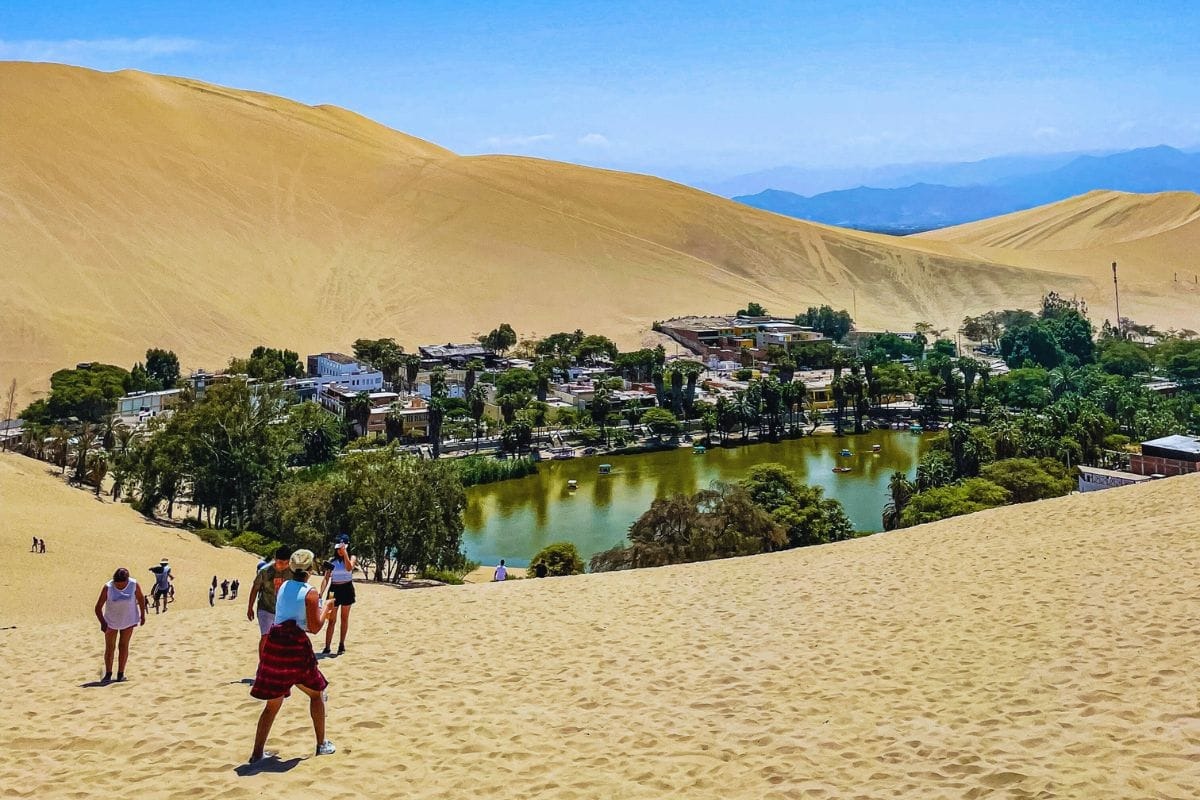
Huacachina is another hour or so south of Paracas, a tiny oasis village built around a natural lagoon in the middle of the Ica desert. The whole village is maybe four streets. The dunes around it rise to extraordinary heights. It looks, frankly, like something a film studio invented and forgot to take down.
The two are usually combined into a single day trip because they’re close to each other but far from Lima and because the things you do at each one don’t take a full day on their own. Together, they make a perfect, exhausting, brilliant loop.
Huacachina and Paracas: Day Trip or Overnight?
Doing everything in one day worked perfectly for me. For most people, one day will work perfectly too you get to see all the main things these places have to offer, and you are not missing out on anything.
You will not feel cheated. You will come home tired, full of pisco, with sand in your shoes and one of the best sunset photos of your life.
That said, if I were to do it again, I would think about giving it two days. Not because I missed anything the first time, but because I move slowly, and I’d love the chance to actually sit with these places instead of bouncing through them. Here’s what those two days would look like.
Day one, Paracas and the vineyard. Take the morning at the Paracas National Reserve and the Ballestas Islands boat ride, the same way the tours do. After that, instead of letting the bus rush you onward, take the afternoon to explore Paracas itself. Walk the town. Have lunch slowly. The desert sun is no joke, so sunscreen is non-negotiable. Then head to the vineyard in the late afternoon, and this is where I’d really stretch out. When you’re on a tour, you get a tasting and a quick lunch, and you’re back on the bus. I saw them doing activities I couldn’t join because we were moving too fast. Grape crushing. Walking the rows. Real conversations with the people who make the pisco. That’s what a slow day at the vineyard looks like.
Day two, Huacachina, all day. Have a lazy morning. Wake up when you wake up. Get coffee at the oasis. Then start your Huacachina day in the afternoon at a pace that lets you actually try things, not just one buggy ride and a quick sandboard, but the longer rides, the gliding option where they tow you behind the buggy on a board, more sandboarding, more time at the top of the dunes. Then, at sunset, the same way the day-trippers do it, except you’re not racing back to Lima after. You’re walking back to your hotel.
.”
| Day Trip | Overnight | |
|---|---|---|
| Time | 16–18 hours, single day | 2 days, 1 night minimum |
| Cost | $80–$90 USD per person | $150–$220 USD per person |
| What you see | Ballestas, vineyard, Huacachina dunes, sunset | Same, but at your own pace + more dune time |
| Energy level | High early start, late return | Slow lazy mornings, longer activities |
| Best for | Tight itineraries, first-timers, single-day-spare travellers | Slow travellers, photographers, anyone wanting depth |
| Skip if | Severe motion sickness, hate early starts | You’re on a tight Peru schedule |
The day trip is the right call for most travellers. The overnight is for the slow traveller who wants to sit in these places longer.
How to Get From Lima to Huacachina and Paracas
You’ve got three options.
Take an organised tour from Lima. This is what I did. You get picked up early, the logistics are handled, you’re not negotiating prices in Spanish at 5am, and you have a guide who knows the routine. The tour I took covered everything I’m describing in this post in a single day, and the price was reasonable for what you get.
Take a public bus from Lima to Ica or Paracas. Cheaper, but a much harder day. You’d need to take a long-distance bus from Lima’s Plaza Norte or Javier Prado terminal. Companies like Cruz del Sur or Peru Hop run regular routes, then taxi from Ica to Huacachina (about 10 minutes), and arrange your boat tour to the Ballestas separately when you arrive in Paracas. This works if you’re staying overnight or if you’re a confident solo traveller comfortable with Spanish-language logistics.
Hire a private driver. The most expensive option and the most flexible. Worth considering if you’re travelling as a group of three or four and can split the cost, or if you have specific stops you want to make that aren’t on the standard tour route.
How Much Does the Huacachina and Paracas Day Trip From Lima Cost?
Let me break this down properly, because the answer is “it depends on what you book and what’s included.”
I went on a budget tour, and for two people, our total day came to about $114 USD all in that’s roughly $57 USD per person for the tour itself. That covered the Lima pickup, the bus down to Paracas, the boat ride to the Ballestas Islands, the vineyard visit and pisco tasting, and the dune buggy and sandboarding at Huacachina.
Lunch was not included in our tour, even though some operators include it. We had lunch at the vineyard and I paid about 40 Peruvian Soles (around $11 USD) for my meal.
There are also a few small fees you pay separately, in cash, on the day:
- Paracas local tax / port fee: 16 PEN per person (around $4 USD)
- Huacachina entry fee: 8 PEN per person (around $2 USD)
- Bathrooms along the way: 1–2 PEN per stop
Add it all up tour, lunch, taxes, transport on either side and a budget day trip from Lima to Huacachina and Paracas comes to about $80–$90 USD per person, give or take.
If you want something more comfortable smaller group, included meals, hotel pickup premium tours sit around $100–$140 USD per person. Private tours and overnight options can climb past $250.
You don’t need to spend more. The budget version is the same Ballestas, the same vineyard, the same dunes. The only thing that changes is how many people are in your buggy.
Huacachina and Paracas Day Trip Itinerary (Hour by Hour)
4:30 am. You wake up before the city does. Get an Uber to the tour meeting point in Miraflores or wherever your hotel is. The streets are quiet in a way Lima rarely is.
5:00am. The bus arrives. The guide goes through the roll call to make sure everyone is there, gives a quick briefing in Spanish and English, and you’re rolling south on the Pan-American Highway as the sun comes up over the desert on your left and the Pacific on your right.
I get motion sickness. I always have. So whenever I know I have a long bus ride ahead of me, I take Dramamine, usually about 30 minutes before the bus pulls off, sometimes right as we’re rolling out. That’s the rhythm I keep, and it’s served me well across more bus rides than I can count.

8:30 am arrive in Paracas. The bus drops you near the boat dock. You get a life jacket and a quick safety briefing, and you board a small speedboat that holds about thirty people. The boat heads out into the Pacific toward the Ballestas Islands. (More on the Ballestas in a minute; they deserve their own section.)
11:30 am back to land, head to the vineyard. The bus picks you up and drives inland toward Ica, where the desert wine country begins. About a one-hour drive.
12:30 pm vineyard lunch and pisco presentation. Most tours stop at one of the vineyards in the Ica region. You have lunch, then sit through a presentation on the production process and the different liquors they make from pisco, followed by a tasting of multiple varieties.
3:00 pm arrive in Huacachina. This is when you first see the oasis. There’s a moment when you come over the rise and the whole thing appears below you, green palm trees, blue water, golden sand on every side, and you realise the photos didn’t lie. It really does look like that.

Now, depending on your tour, you might get options here. On mine, we had a choice: spend two and a half hours on the buggies and the dunes, or break it up. I wanted to walk through Huacachina itself for a bit, see the town, pick up a few souvenirs, just be in the place, so I gave myself an hour for that and an hour and a half on the dunes. That’s the choice I made. You’ll have your own.
5:00 pm dune buggy and sandboarding. The main event.
7:00 pm sunset on the dunes. This is where the trip lives. You stop at the highest dune the buggy can climb, and you watch the sun drop into the desert.
8:00 pm back on the bus to Lima.
11:20 pm back in Lima. Sandy, full of pisco, grinning. Order food and crash.
The Ballestas Islands: More Than a “Poor Man’s Galápagos”
The Ballestas are nicknamed “the Poor Man’s Galápagos.”
I lived in Ecuador for three years. I have been to the Galápagos. And I’ll tell you the Ballestas and the Galápagos are not the same thing. They are two different ecosystems doing two different things, and I’d rather you go to the Ballestas with the right expectations than with the wrong comparison sitting in your head.
What I learned about the Ballestas across the two-hour ride was completely Peruvian. The guide talked about the bird species that live on the islands: boobies, cormorants, pelicans, Humboldt penguins, and how the conditions there are so dry that it almost never rains, which is why the guano (bird droppings) builds up in such extraordinary quantities over time. Did you know that the islands are coated in centuries of the stuff? At one point, our guide told us, they were harvesting it commercially as fertiliser. Whole industries built on bird droppings. The history is wilder than you’d expect.
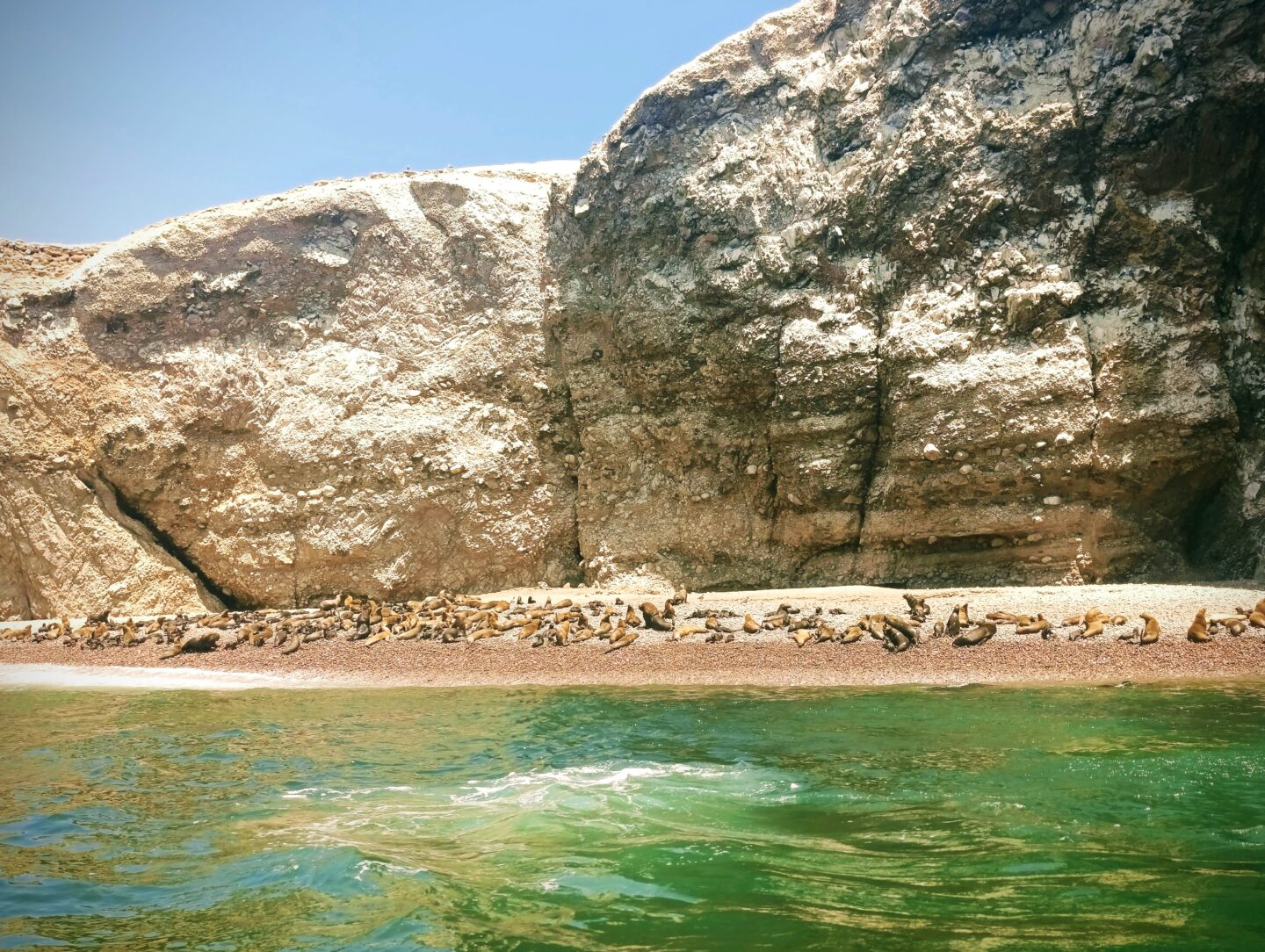
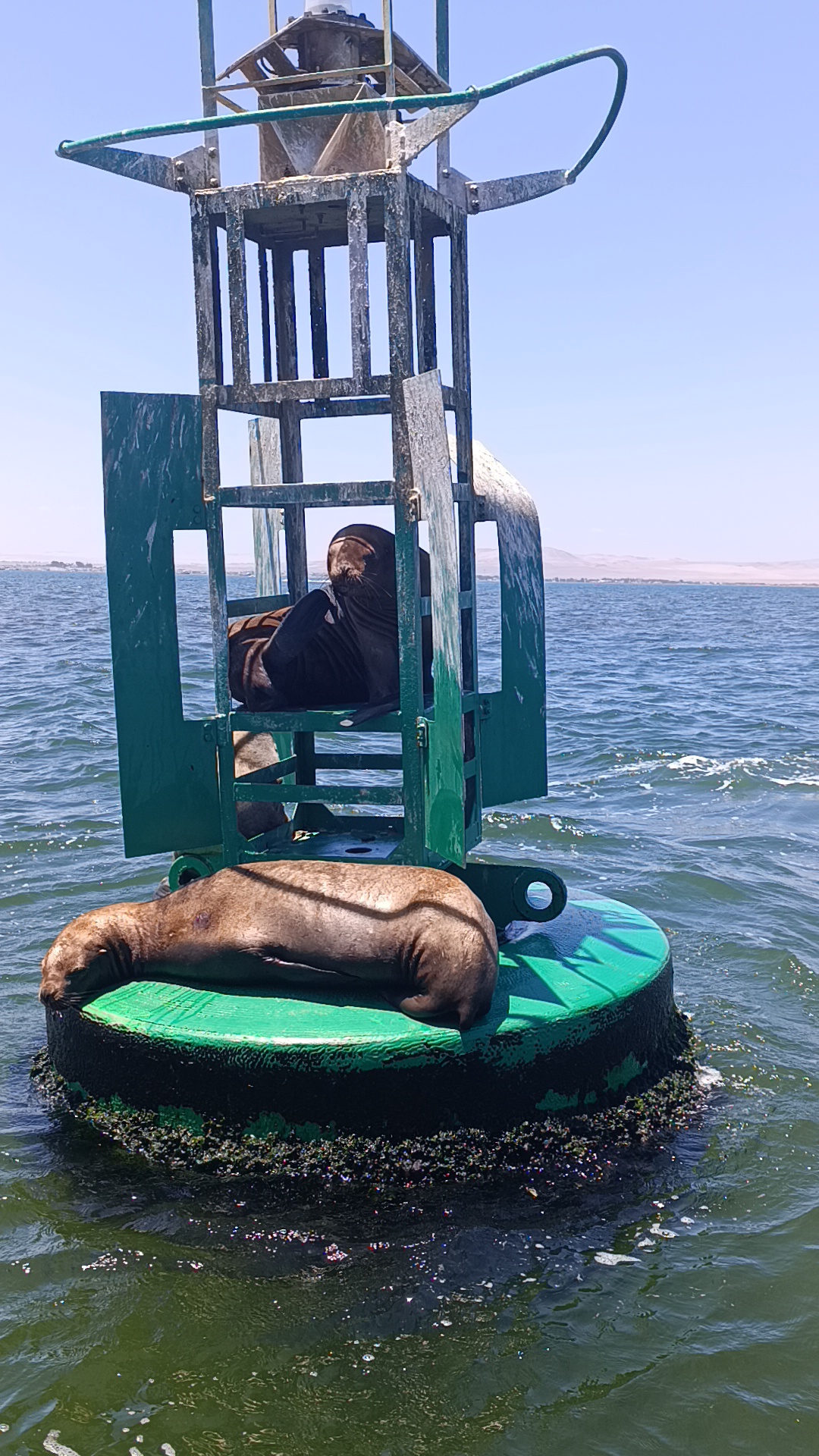
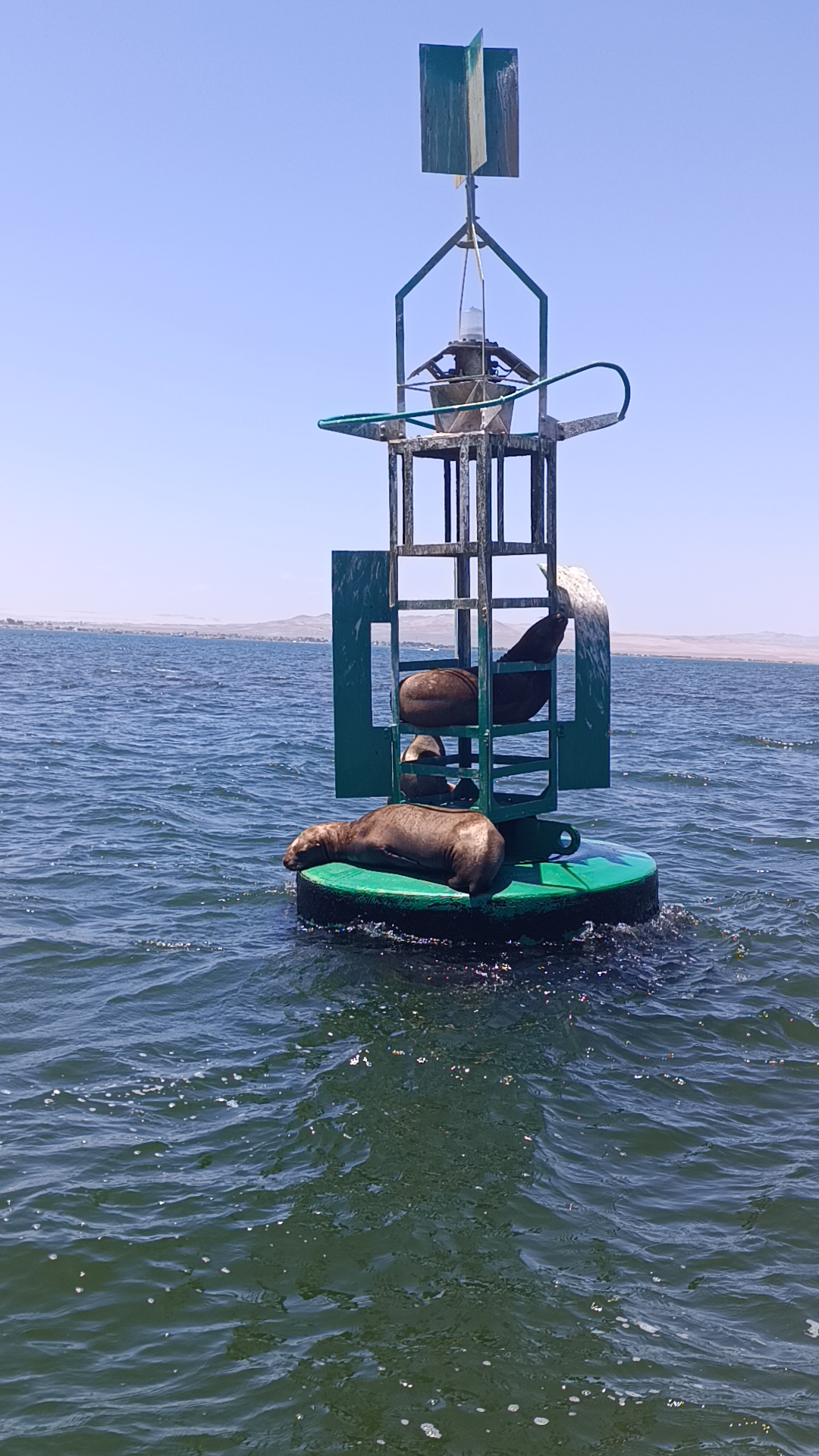
The islands themselves are an extraordinary cluster of rocky outcrops covered in marine life. Thousands upon thousands of birds. Sea lions on every available rock. And at one point during our boat ride, I looked over and saw two sea lions sitting on top of a buoy. A buoy. How do these big chunky animals climb up onto a buoy in the middle of the ocean? I still don’t know. But they were up there, lounging, like they’d booked the spot in advance.
Two sea lions, sitting on top of a buoy, like they’d booked the spot in advance.
The boat ride itself can be a little rough, so eat a light breakfast and don’t push your luck. If you’re prone to seasickness, take your motion sickness tablet 30 minutes before you board. Bring sunglasses, the sun off the water is intense and reapply your sunscreen before you get on.
You’ll see the Candelabra on the way out, a 600-foot geoglyph carved into the side of a desert cliff that nobody can fully explain. Some say it dates back more than 2,000 years to the Paracas culture. Others say sailors carved it as a navigational marker. Either way, there’s a giant unexplained drawing on a desert cliff facing the ocean, and you’re seeing it from a boat.
The Vineyard Stop
If you’re in Ica, which is the heart of Peru’s wine and pisco country, you cannot miss out on stopping at a vineyard.
Pisco is a brandy made from specific grape varieties, distilled once without dilution, which gives it a freshness and directness that aged brandies don’t have. It’s a national obsession in Peru, and rightly so. The Ica region produces some of the best in the country.
At the vineyard, lunch came first. Then we all sat down for a presentation. Two gentlemen came out and walked us through the production process, the different grape varieties, what it takes to make pisco, the meals it pairs with, and then the different liquors they make using pisco as a base, including the alcohol percentages of each. After the presentation, they brought out samples for us to taste.
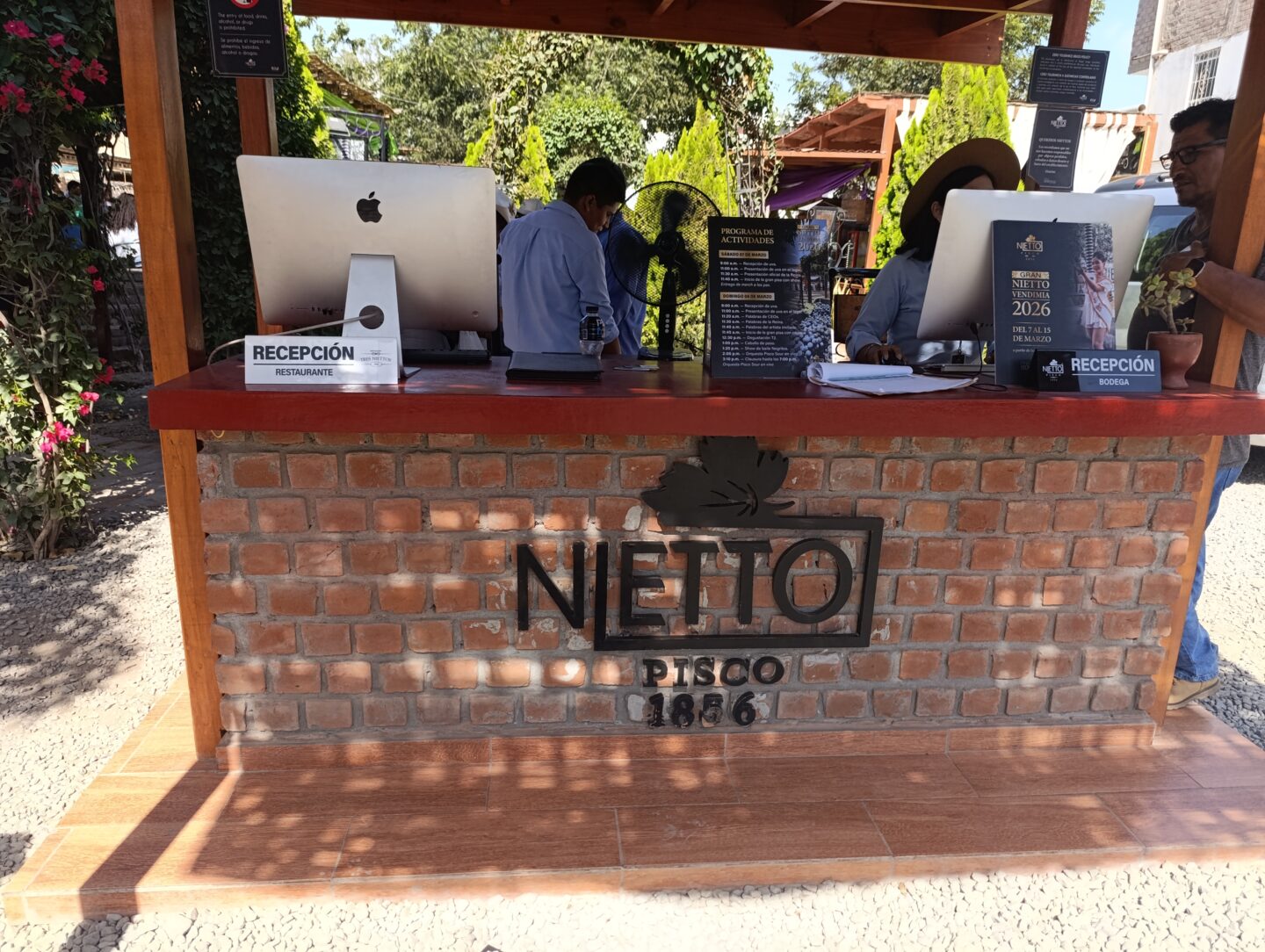
If I’d had a slow day to do this properly, I’d have wandered the property afterwards to see the actual production of the stills, the barrels, the people doing the work. That’s the version I want next time.
In the end, it was all worth it. The lunch was phenomenal. The tasting was the bomb. And if you’re so inclined, you can pick up a bottle of your favourite to take back to Lima with you, or all the way home. Spoiler alert: Pisco is excellent in carry-on luggage.
The Dune Buggy and Sandboarding
As most of you may know, the dunes of the Huacachina oasis are one of the top reasons people visit Ica. And whatever you’ve seen on Instagram or wherever you find your inspiration, the actual experience is a hundred times better.
There were five of us in the buggy, plus our driver, who decided early on to walk that thin line between terrifying and enjoyable. He’d climb a dune, get to the top, and drop. The buggy would tip and fall, the wind would blow, and I would scream. We screamed every single time. He laughed. We laughed. He kept doing it. It was absolutely terrifying and absolutely amazing, so good. So so good.
He took us all around, drifting sideways, climbing impossibly steep faces, and eventually drove us to the top of a really high dune, the one we’d be sandboarding from, and the one we’d watch the sunset from later. The sandboarding was incredible. Going down is exhilarating; trying to walk back up gives you a full workout.
So, guess what happened.
I ate sand.
How, you may ask. Well, before we got in the buggy, I decided my look had to be a certain kind of way. I saw people putting things over their faces, little neck-gaiter scarves they were selling near the dunes, and I thought, ” No, that doesn’t match the aesthetic at all.” So I got in without one.
I ate sand. Cover up, baby girl. If you don’t want to end up like me — don’t end up like me.
While we were on the buggy, and that driver was pressing the gas, and the wind was picking up sand, and I was screaming and shouting and laughing, I ate sand.
So for all you ladies out there: cover up, baby girl. Cover up. If you don’t want to end up like me, don’t end up like me. Bring something for your nose and mouth, or pack a scarf. It will save you when you’re on the buggy, and it will really save you when you’re sandboarding, because you’re going down those dunes at high speeds, and the sand is coming straight at your face.
After the buggy ride, you get the option to sandboard. They give you a wax board, and you can do it one of two ways: lie face-down on your stomach and ride it like a sled, or stand up on it like a snowboard. Both are an experience.
Then the sunset.
After we’d had our fill of sandboarding and taken what felt like a thousand photos, we just took it in. The dunes are magnificent. Magnificent. Our driver was wonderful; he gave us ideas for shots, helped us pose, and at one point, I was even standing on top of the buggy. The photos came out beautifully.
But what I really enjoyed was the standing still. Just being there in the middle of that vast desert, watching the sun drop, touching the sand, looking around at all of it. I felt on top of the world. And I’d encourage anyone who gets the chance to take the time. Take it in. Don’t rush it. It’s beautiful. Really, really beautiful.
What I Wish I’d Known Before I Went
A few things:
- Take your motion sickness tablet for the boat. I needed mine for the bus too. I get bus-sick if it’s a long ride, but the boat is what really gets you. Take it 30 minutes before you board.
- Cover your face on the dunes. Buy the scarf. I cannot say this enough.
- Bring small change for bathrooms. Most stops along the way charge one or two Peruvian Soles for the toilet. Have coins on you.
- Eat a light breakfast. The boat ride can be rough, and you don’t want to throw up your breakfast over the side.
- Sunscreen, sunglasses, water. The desert sun is brutal, and there’s no shade. Reapply.
- Manage your photo expectations. Huacachina is a tourist attraction. There will be other people. Take your time and get the shots you want; they may not always be perfect, because the place is full of others doing exactly the same thing.
Where to Stay in Huacachina
If you decide to slow it down and stay overnight, or you’re using Huacachina as your base while exploring the Ica region more deeply, there are a handful of properties around the oasis that are worth knowing about.
I’d group them into three tiers.
Luxury / Boutique. For travellers who want oasis views, a pool, and the kind of quiet that’s hard to find this close to a tourist hub.
Mid-range. Comfortable, well-located, and a good fit if you want something nicer than a hostel without spending big.
Budget. For backpackers and slow travellers on tighter budgets who still want to be steps from the lagoon.
A small note: Huacachina is tiny. Wherever you stay, you’ll be a short walk from everything. The differences between these tiers are about comfort and quiet, not location.
What to Pack for the Day
Keep it light. You’ll be on a bus for most of the morning and evening, in a boat in the middle, and bouncing across sand dunes at sunset. A small day-pack is plenty.
- A scarf or buff to cover your nose and mouth on the dunes
- Sunglasses
- High-SPF sunscreen
- A water bottle
- Comfortable, broken-in, closed-toe shoes are best for the sand.
- A light jacket for the bus (the air conditioning runs cold)
- Small change in Peruvian Soles for bathrooms
- Your Dramamine if you need it
- Phone, portable charger, and ideally a wrist strap if you’re filming on the buggy
- Cash and card for souvenirs and the vineyard gift shop
So, Is It Worth It?
Yes. Without question.
For the cost of one long day, you get the Pacific, the desert, a vineyard, a sunset, and a story to tell. The boat ride to the Ballestas is unlike anything else on a typical Peru itinerary. The vineyard is a real piece of the country’s culture, not a tourist add-on. And the dunes, the dunes are something else. They’re the kind of landscape that makes you go quiet in the middle of all that screaming and laughing.
If you have the day, go. If you have two days, slow it down. Either way, this corner of Peru is worth the early start.
Frequently Asked Questions
Is Huacachina worth visiting?
Yes. The oasis itself is small, but the experience of the dune buggy, the sandboarding, and the sunset over the desert is one of the most memorable things you can do in Peru.
How long should I spend in Huacachina?
A single afternoon is enough to do the main activities. If you want to slow down, an overnight gives you the chance to walk the oasis at your own pace and try more on the dunes the next day.
Is Paracas safe for solo travellers?
Yes. Both Paracas and Huacachina are well-trafficked tourist areas with regular tour groups coming through every day. Use the same precautions you would in any tourist destination.
What’s the best time of year to visit Huacachina and Paracas?
The dry season runs roughly from May to November and offers the most reliable weather. I went in March, which is the tail end of the wet season. The desert was still beautiful, but you’ll have a higher chance of clear skies later in the year.
Can I do Huacachina and Paracas without a tour?
You can. Take a long-distance bus from Lima to Ica or Paracas, taxi to Huacachina, and arrange your boat tour to the Ballestas separately when you arrive in Paracas. It’s cheaper, but it’s a much harder day and only worth it if you’re staying at least one night.
How much does the Huacachina and Paracas day trip from Lima cost?
A budget tour from Lima costs around $60 USD per person for the bus, boat to the Ballestas, vineyard visit, and dune buggy. Add another $20–$30 for lunch, local taxes, and small expenses, and you’re looking at roughly $80–$90 USD per person for the full day. Premium tours sit around $100–$140.
How long is the day trip from Lima to Huacachina and Paracas?
Expect 16 to 18 hours door to door. You leave Lima around 5am and you’re back by 11pm. It’s a long day possibly the longest single day of your Peru trip but you see the Pacific, the desert, and a vineyard in one shot.
What’s the difference between the Ballestas Islands and the Galápagos?
They are two completely different ecosystems. The Galápagos is an entire archipelago you spend a week exploring on multi-day cruises. The Ballestas is a two-hour boat ride to a cluster of rocky islands off the Peruvian coast. Both have rich marine life, but they’re not interchangeable, and the “Poor Man’s Galápagos” nickname undersells what the Ballestas actually is a uniquely Peruvian wildlife experience.
Is the Huacachina day trip worth it from Lima?
Yes. For most travellers, this is one of the most memorable days you’ll have in Peru. You see the Pacific coastline, taste pisco at a working vineyard, and watch the sun drop behind a sand dune the size of a building. Skip it only if you have severe motion sickness or genuinely cannot do an early start.
Do I need to speak Spanish?
Most tours are run in Spanish and English, and the guides on the popular routes are bilingual. A few key phrases go a long way, but you don’t need to be fluent.
Is the dune buggy ride scary?
It can be intense; there’s real speed and real drops involved. But the drivers know what they’re doing, the buggies have seatbelts and roll cages, and the ride is genuinely fun. If you’re nervous, sit in the middle row and hold on.
A Final Thought
The thing I keep coming back to about that day is the standing still at the top of the dune. The buggy was off. The driver was somewhere behind us, having a smoke. The other tourists were spread out, finding their own quiet corners. And I just stood there in the wind, watching the sun drop into a desert I never knew Peru had, with sand still in my teeth and pisco still in my system, thinking about the version of me who almost cancelled this trip.
She would not have believed it.
The version of me who almost cancelled this trip — she would not have believed it.
Travel does this. It reminds you that the things you’re afraid of losing money, security, certainty, are not actually what you’re here for. You’re here for the desert at sunset. You’re here for the sea lion sitting on a buoy. You’re here for the friends who pick you up at the airport just because, and the strangers who scream beside you on a buggy because the driver has lost his mind.
Go. The desert is waiting. So is the rest of Peru.
If this guide helped you, save it for later, share it with someone planning their own Peru trip, and come find me on Instagram. I’d love to see your photos when you’re back.
Live deeper, travel slower.
Check Out These Links
Tarjeta Andina de Migración (TAM) Virtual
Llaqta Machupicchu
Inca Rail
What to know before visiting Peru
The 10-Day Peru Itinerary (Lima, Cusco & Machu Picchu)
How to Do Machu Picchu Peru
The Complete Guide to Miraflores, Lima
Things to Do in Lima That Aren’t Just Touristy
Are You Planning Your Next Trip? Here’s What I Use
These are the tools I rely on to make every trip smoother, safer, and more meaningful. If you use the links below, I may earn a small commission at no extra cost to you. Thank you for supporting this blog and my journey as a full-time traveller 💜
1. Learn the Local Language
I use Babbel to practice Spanish, French, and Portuguese while travelling. The app makes it so easy to learn useful phrases on the go.
2. Travel Insurance is a Must
I never leave home without SafetyWing. They’re affordable and ideal for frequent travellers or digital nomads.
3. Book Your Tours & Experiences
For unique local tours and must-see experiences, I use:
→ Viator
→ Get Your Guide
4. Always Stay Connected
No matter where I go, Keepgo helps me stay connected with international data SIMs and eSIMs that actually work. A lifesaver when Wi-Fi fails!
5. Organise Your Itinerary
I use Tripsy to plan and store my itineraries, documents, and bookings in one clean app. It’s perfect for keeping track of everything in one place.
Until next time, travel softly,
Destiny 💜

Exploring the globe, one cultural story at a time. Dive into immersive travel experiences, historical discoveries, and authentic connections with local communities. Join the journey where every place has a story.
